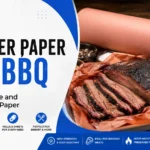
Butcher Paper for BBQ is commonly used to wrap brisket, ribs, pork shoulder, and other smoked meats because it can provide support during the cook while allowing more moisture to escape than a tight foil wrap. But not every butcher paper is made for smoking.
The right choice depends on the paper’s construction, intended use, size, and heat suitability. For BBQ restaurants, caterers, pitmasters, and food brands, the paper also needs to fit the way meat is cooked, wrapped, stored, and served.
What Is Butcher Paper for BBQ?
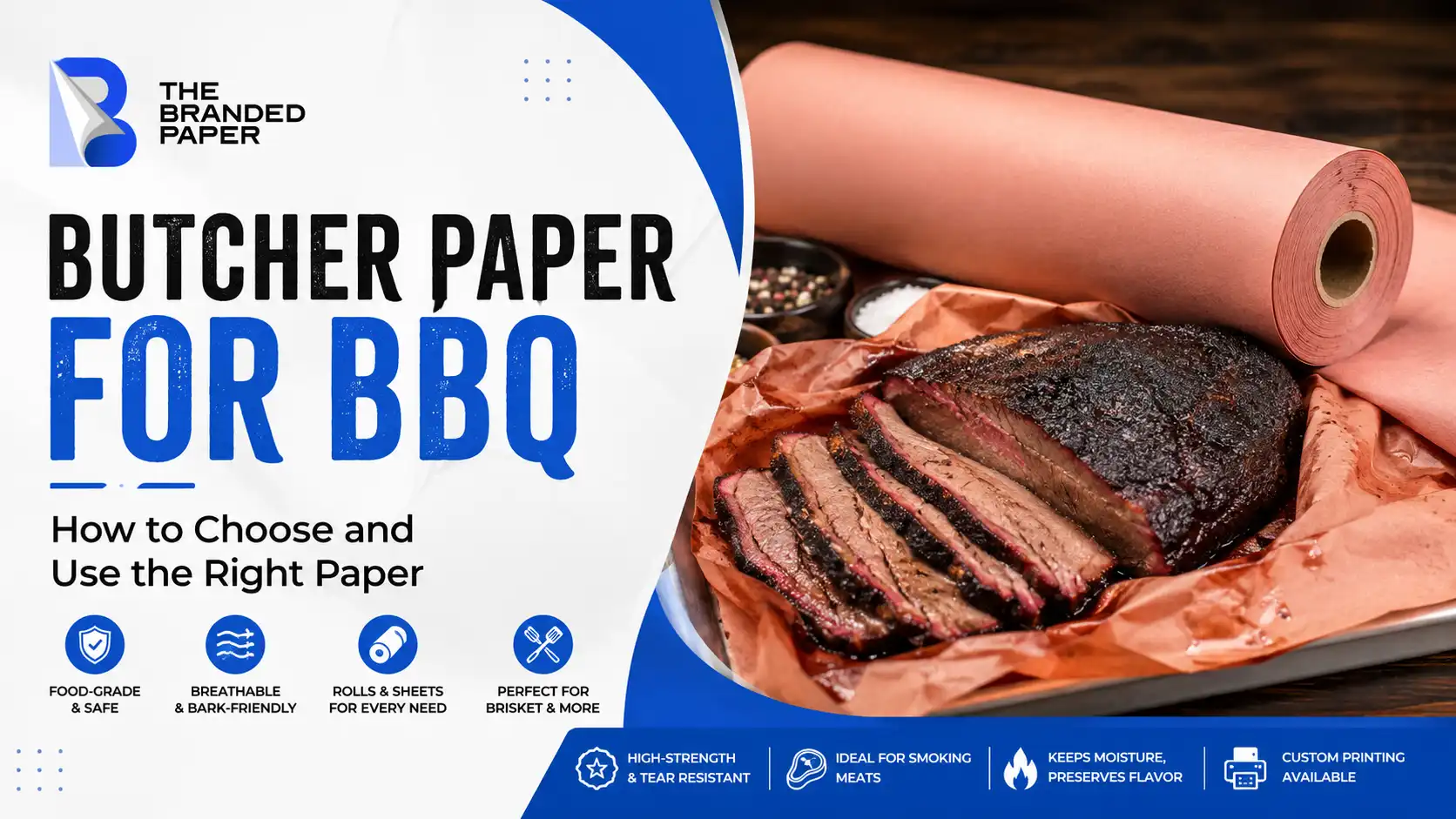
Butcher paper for BBQ is a food-contact wrapping paper designed for meat handling and, when specifically rated for it, use during smoking. Pink or peach butcher paper is especially associated with brisket because it can help protect the meat while still allowing some moisture and smoke movement.
The key is not the color alone. A paper should be selected based on its intended food use, construction, treatment, strength, and heat suitability.
Ordinary craft paper, decorative paper, mailing paper, wax-coated paper, or unknown printed paper should not be substituted for paper intended for food or smoking use.
For a deeper look at paper formats, see Butcher paper sheets vs. rolls.
Why Do BBQ Cooks Use Butcher Paper?
Butcher paper is popular in smoking because it can offer a middle ground between leaving meat uncovered and wrapping it tightly in foil.
For brisket, the main appeal is moisture management while helping preserve the outside bark. Compared with foil, suitable butcher paper is more breathable, so it does not create the same tightly sealed environment around the meat.
That difference can matter during the later stages of a long smoke.
Butcher paper can help with:
- Protecting the surface of the meat
- Reducing direct exposure to dry heat
- Managing surface moisture
- Supporting bark development
- Making large cuts easier to handle
- Wrapping meat for holding after cooking
The actual result depends on the paper, smoker, meat, temperature, and wrapping method. Paper is only one part of the cooking process.
Best Butcher Paper for BBQ: What Should You Look For?
The best butcher paper for BBQ is not simply the thickest or pinkest paper available. Look for a food-grade paper that is explicitly suitable for the intended application, with enough strength to wrap the cut without tearing.
Before buying, check these factors:
| Factor | What to Look For | Why It Matters |
| Intended use | BBQ or smoking suitability | Not all butcher paper is made for heat |
| Food-contact suitability | Food-grade construction | Direct food contact requires appropriate materials |
| Coating | Appropriate, disclosed treatment | Unknown coatings may be unsuitable for smoking |
| Strength | Paper that holds wet, hot meat | Helps prevent tears and leaks |
| Breathability | Suitable for the cooking method | Affects moisture movement and bark |
| Width | Enough coverage for the cut | Makes wrapping large briskets easier |
| Format | Roll or sheet | Depends on meat size and workflow |
| Printing | Food-appropriate inks and construction | Important for branded food packaging |
For commercial kitchens, a material sample is worth testing before committing to a large custom order.
Pink Butcher Paper for BBQ: Why Is It So Popular?
Pink butcher paper for BBQ has become closely associated with brisket and smoking because many pitmasters use suitable pink or peach paper for wrapping large cuts.
The color itself does not make a paper suitable for a smoker. What matters is the paper’s actual construction and intended application.
Pink paper is popular for practical as well as visual reasons. It creates the familiar smokehouse look while helping protect the meat during the cook.
A BBQ operation should still verify that the exact paper is food-grade and intended for the cooking conditions involved.
Butcher Paper for Brisket: When Should You Wrap?
Wrapping time depends on the brisket, smoker, cooking conditions, and the result you want.
Many cooks wrap brisket after the outside has developed a desirable bark rather than wrapping it immediately. Wrapping too early can change the surface texture and reduce the time the meat spends developing its exterior bark.
The brisket stall is another reason wrapping comes up so often. As moisture evaporates from the meat, evaporative cooling can slow the rise in internal temperature. Wrapping can change the cooking environment and help the cook move through the later portion of the process.
There is no universal clock time that works for every brisket.
Instead, look at:
- Bark development
- Internal temperature
- Meat tenderness
- Surface moisture
- The cooking schedule
- Your desired final texture
How to Use Butcher Paper for Brisket
How to use butcher paper for brisket comes down to getting enough coverage for a secure wrap without creating unnecessary layers.
A practical process looks like this:
- Place a wide sheet or roll of suitable paper on a clean work surface.
- Position the brisket so the paper provides enough room on all sides.
- Fold one long side firmly over the meat.
- Fold the opposite side over it.
- Tuck the shorter ends underneath the brisket.
- Keep the wrap secure without crushing the meat.
- Return the wrapped brisket to the smoker according to your cooking method.
- Continue monitoring internal temperature and tenderness.
The paper should stay intact throughout the cook. If it tears easily, leaks heavily, or cannot provide secure overlap, the size or material may not be appropriate.
How to Wrap Brisket in Butcher Paper
For large briskets, a roll is often easier than a fixed sheet because you can cut enough length for the actual size of the meat.
The paper should provide room for:
- Full coverage
- Overlapping folds
- Secure end folds
- Handling the wrapped brisket
- A clean transfer back to the smoker
Do not use the smallest possible piece simply to save paper. An undersized wrap can open during handling and make the process harder.
If you operate a BBQ restaurant with different meat sizes, butcher paper sheets and rolls can serve different parts of the workflow.
What Size Butcher Paper for Brisket?
There is no single universal butcher paper size for brisket. Whole briskets vary in length, thickness, trimming style, and weight, so a wide roll is often the most flexible option.
Measure the brisket after trimming and allow enough paper for overlapping folds on every side.
A practical starting approach is:
| BBQ Application | Practical Starting Format |
| Whole brisket | Wide roll or oversized sheet |
| Large pork shoulder | Wide roll |
| Rack of ribs | Wide sheet or adjustable roll |
| Smaller smoked cuts | Medium sheets |
| Sliced brisket for service | Pre-cut sheets |
| BBQ tray or basket | Sheet sized to the tray |
These are starting points rather than fixed rules. The actual paper size should be tested with the cut you prepare.
For businesses handling multiple meat sizes, rolls can reduce the need to stock many different sheet dimensions.
Butcher Paper vs Foil for Brisket
Butcher paper vs foil for brisket is mainly a question of how tightly you want to control moisture around the meat.
| Feature | Butcher Paper | Aluminum Foil |
| Moisture escape | More breathable | More tightly sealed |
| Bark | Can help preserve bark texture | Can soften bark more easily |
| Moisture retention | Moderate | High |
| Wrap flexibility | Good | Very flexible |
| BBQ tradition | Widely used for smoking | Also widely used |
| Best fit | Balanced cooking environment | Strong moisture retention |
Neither method is automatically better.
Butcher paper is often chosen when bark matters, and the cook wants a less sealed wrap. Foil can be useful when retaining moisture and accelerating the cooking process are higher priorities.
Your preferred finish should determine the method.
Butcher Paper vs Foil for BBQ
The same decision applies beyond brisket.
For pulled pork, ribs, beef roast, and other smoked cuts, consider what matters most:
Choose suitable butcher paper when you want more breathability and want to protect the developing bark.
Choose foil when you want a tighter moisture barrier and stronger containment of juices.
The cooking method, meat cut, desired bark, and holding plan all matter.
This is why there is no universal winner in the butcher paper vs aluminum foil debate.
Pink vs Brown Butcher Paper for BBQ
Pink vs brown butcher paper for BBQ should not be decided by color alone.
Two papers with different colors may have very different constructions, treatments, strengths, and intended uses. A natural brown appearance does not automatically mean the paper is better for smoking, more sustainable, or food safe.
For BBQ use, verify:
- Food-contact suitability
- Intended temperature range
- Whether the paper is coated or treated
- Whether the supplier specifies smoking or cooking use
- Paper strength and thickness
- Available sizes and roll widths
The same rule applies to printed BBQ paper. A custom design does not make an unsuitable paper appropriate for a smoker.
For a broader look at the difference between paper types, see Kraft paper vs. butcher paper.
Can You Use Butcher Paper in a Smoker?
You can use butcher paper in a smoker only when the exact paper is designed and rated for that application. The term “butcher paper” alone is not enough to establish heat suitability.
Do not assume that every paper sold as butcher paper can safely go into a smoker.
Avoid materials with unknown coatings, wax treatments, plastic layers, decorative printing, or unclear food-contact specifications.
For food businesses, request documentation and product specifications from the supplier before using a paper around heat.
That matters even more when the paper is custom printed. The paper, inks, coatings, and intended food-contact conditions should all be appropriate for the application.
Is Butcher Paper Food Safe?
Food safety depends on the specific paper and how it is intended to be used. Paper and paperboard components used with food are subject to FDA requirements covering food-contact applications, including provisions for contact with aqueous and fatty foods under 21 CFR 176.170.
For a BBQ operation, ask the supplier to confirm that the exact product is appropriate for:
- Direct food contact
- Fatty foods
- Hot foods
- The intended cooking or holding conditions
- Any printing or coating system used
A supplier should be able to explain the material rather than relying only on a generic product name.
What Is Butcher Paper Used for BBQ Beyond Brisket?
Butcher paper is not limited to brisket.
Suitable butcher paper can be useful for smoking, wrapping, handling, and serving several BBQ foods, provided the exact paper is appropriate for the application.
Common uses include:
- Brisket
- Pork shoulder
- Ribs
- Pulled pork
- Smoked beef
- Large meat cuts
- BBQ sandwich wrapping
- Tray and basket presentation
The paper used inside a smoker may also be different from the paper used to serve sliced meat. A restaurant can use a roll during cooking and pre-cut branded sheets during service.
That setup can make the workflow easier without forcing one paper format to handle every task.
How Much Butcher Paper for a Brisket?
The amount of paper needed depends on the brisket size and how you wrap it.
A large brisket normally needs enough length for multiple overlapping folds. It is better to start with more paper than to discover halfway through the wrap that there is not enough coverage.
For BBQ businesses buying wholesale, estimate usage from the actual number of briskets wrapped each week rather than ordering based only on the weight of the meat.
Track:
- Briskets wrapped per week
- Average paper length per brisket
- Waste from trimming or failed wraps
- Roll width
- Extra paper used during handling
That gives you a more realistic paper requirement.
Common Mistakes When Choosing Butcher Paper for BBQ
A good paper choice can still fail if the material or workflow is poorly matched.
Choosing by color
Pink does not automatically mean smoker-safe.
Using ordinary craft paper
Paper designed for crafts, shipping, or decoration is not automatically suitable for food contact.
Buying the wrong width
A narrow roll can make a large brisket difficult to wrap securely.
Wrapping too early
Wrapping before the bark has developed can change the final surface texture.
Buying bulk quantities before testing
A paper can look excellent on a product specification sheet and still behave differently around hot meat, juices, and steam.
Ignoring the service side
Cooking paper and customer-facing wrapping do not always need the same format.
A roll may work best around the smoker, while branded sheets may be faster at the counter.
How BBQ Restaurants Can Choose the Right Butcher Paper
For restaurants and commercial BBQ operations, paper selection should start with the workflow.
Start by deciding what the paper needs to do, where it will be used, and what food it will touch. Then match the paper construction, size, format, and print requirements to that job.
A practical buying process is:
- List the meats you wrap.
- Separate smoker use from serving use.
- Measure your largest cuts.
- Choose a roll or sheet format.
- Confirm food-contact suitability.
- Verify smoking or heat suitability where required.
- Test the paper with real meat and normal cooking conditions.
- Check how much paper each wrap actually uses.
- Review storage and dispenser requirements.
- Approve a sample before a large custom order.
The Branded Paper supplies Custom butcher paper for food businesses that need branded wrapping in standard or custom formats. For BBQ brands, the useful question is not simply whether the paper can carry a logo. It is whether the material, size, print, and format fit the actual BBQ operation.
Can Butcher Paper Be Custom Printed for BBQ Businesses?
Yes. Custom printed butcher paper can turn a practical BBQ wrapper into part of the customer experience. A logo, repeating pattern, brand message, or other design can make the package recognizable before the customer even opens it.
For BBQ restaurants, custom printing can work well on:
- Brisket service paper
- Sandwich wrappers
- Tray liners
- Counter-service sheets
- Catering packaging
- Takeout presentation
The design should be tested on the finished wrap rather than judged only on a flat sheet. Folds can hide logos, while heavy grease or moisture can change how the print appears.
For other restaurant wrapping needs, Custom food wrapping paper can provide additional material and format options.
Should You Buy Butcher Paper in Sheets or Rolls?
Buy sheets when speed and consistency matter most. Choose rolls when you need flexible lengths for large or irregular cuts. Many BBQ businesses can benefit from using both.
A roll is especially practical for:
- Whole briskets
- Pork shoulders
- Large ribs
- Irregular meat cuts
- Preparation areas
Sheets can be more useful for:
- Sliced brisket
- BBQ sandwiches
- Counter service
- Tray liners
- Standardized portions
Your best choice is the format that reduces waste and makes the job easier for staff.
How to Choose Butcher Paper for Your BBQ Business
The right Butcher Paper for BBQ is the paper that matches the cooking method, meat size, heat conditions, and intended use.
For brisket, suitable pink or peach butcher paper is popular because it offers a useful balance between protection and breathability. Foil provides a tighter seal, while sheets and rolls solve different workflow problems.
For BBQ restaurants and food brands, the best approach is simple: verify the material, test it with real food, choose the right size, and then consider branding.
When the paper needs to perform during both cooking and customer service, a properly specified custom solution can help keep the BBQ operation consistent from the smoker to the customer’s table.
Frequently Asked Questions
1. Is pink butcher paper the best paper for BBQ?
Pink butcher paper is a popular BBQ choice, especially for brisket, but color alone does not determine performance. Confirm that the exact paper is food-grade and suitable for smoking or cooking before use.
2. Can you use butcher paper instead of foil for brisket?
Yes, suitable butcher paper can be used instead of foil for brisket. Butcher paper generally allows more moisture movement, while foil creates a tighter seal.
3. What size butcher paper should I use for brisket?
A wide roll is often the most practical option because you can cut enough length for the specific brisket. The wrap should allow full coverage and secure overlapping folds.
4. Does butcher paper make brisket more tender?
Paper does not independently make brisket tender. It changes the cooking environment and can help manage moisture during the cook. Tenderness still depends on the meat, temperature, cooking time, and final doneness.
5. Can I use butcher paper in a smoker?
Only use paper specifically identified as suitable for smoking or cooking. Do not assume generic butcher paper is heat-safe.
6. Is butcher paper better than foil for BBQ?
Neither is universally better. Butcher paper offers more breathability, while foil creates a tighter moisture barrier. The better choice depends on the meat and desired finish.
7. How much butcher paper do I need for a brisket?
You need enough paper to completely cover the brisket with overlapping folds. For large cuts, a wide roll is usually easier to size than a fixed sheet.
8. What is the difference between butcher paper and kraft paper?
They can look similar, but their construction and intended applications can differ. BBQ paper should be selected based on food-contact and smoking suitability rather than appearance alone.
9. What temperature is safe for smoked meat?
Smoking meat requires temperature control with a food thermometer. USDA guidance states that whole cuts of beef, pork, lamb, and veal should reach at least 145°F with a three-minute rest, while ground meats should reach 160°F and poultry 165°F.