A good burger wrap has to do more than hold the burger together. It needs to handle grease, sauces, heat, and moisture without turning the meal into a messy package. For busy restaurants, the right paper also needs to be quick to grab, easy to fold, and practical for dine-in, takeout, and delivery.
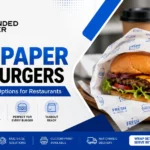
Deli paper for burgers can be a smart choice when the paper grade matches the food and service conditions. The burger itself matters too. A dry smash burger and a loaded double cheeseburger place very different demands on a wrapper. Restaurants should look at grease resistance, paper size, food-contact suitability, wrapping method, and holding time before choosing a sheet. The goal is simple: keep the burger presentable while making packaging easy for the kitchen and comfortable for the customer.
Is Deli Paper Good for Burgers?
Deli paper can be a good burger wrapper for restaurants when the selected paper is designed for direct food contact and provides enough resistance to the burger’s grease and moisture level. It is lightweight, easy to handle, and useful for wrapping or lining. For burgers with heavy sauces, high grease, or longer holding times, a more grease-resistant food paper may be a better fit.
Deli paper is often used for everyday food-service applications because it can serve more than one purpose. A restaurant may use the same type of sheet for:
- Burger wrapping
- Sandwich wrapping
- Basket lining
- Tray lining
- Counter service
- Takeout presentation
The advantage is speed. Employees can grab a sheet, wrap the burger, and move to the next order without assembling a box or adding several layers of packaging.
The important part is matching the paper to the burger. A simple burger served immediately may need less resistance than a large burger loaded with sauce, cheese, and oily toppings.
What Paper Is Used to Wrap Burgers?
Restaurants commonly use deli paper, greaseproof paper, wax-coated food paper, and other food-grade wrapping papers for burgers. The right option depends on grease, moisture, temperature, holding time, and whether the burger is served in-store or packed for takeout.
The Branded Paper’s burger packaging guidance also notes that restaurants use deli paper and other food wrapping materials based on the conditions of the burger rather than choosing a paper type by name alone.
| Paper Type | Best Use | Grease Resistance | Heat Consideration | Restaurant Use |
| Deli paper | Everyday burgers, wraps, liners | Good, depending on grade | Depends on material | Excellent |
| Greaseproof paper | Oily or heavily sauced burgers | High | Depends on grade | Excellent |
| Wax paper | Suitable for cold or low-heat wrapping | Good | Limited for high heat | Good |
| Parchment paper | Applications where heat resistance matters | High | Higher heat capability when rated for it | Situational |
| Kraft food paper | Rustic presentation and lighter applications | Varies | Depends on grade | Situational |
There is no universal “best” burger paper. A restaurant should choose based on actual service conditions.
Why Grease Resistance Matters With Burgers
Grease resistance helps keep oil, meat juices, melted cheese, and sauces from quickly soaking through the wrapper. That matters because a burger can place pressure on paper from several directions at once. A wrapper that looks fine when dry may perform very differently once it contacts hot, greasy food.
Burger fillings can include:
- Beef fat
- Fried onions
- Melted cheese
- Mayonnaise and aioli
- Ketchup and special sauces
- Buttered buns
- Fried toppings
That is why the best paper for greasy burgers is not simply the thickest paper. The surface treatment and intended food-contact use matter as well.
The FDA explains that food-contact substances can be used in packaging to help prevent grease from leaking through paper or cardboard, and that substances used for food-contact applications need to be authorized for their intended use.
For restaurants, that means a useful purchasing question is not just, “Is this deli paper?” Ask what the paper is designed to handle.
What Makes Food-Grade Burger Wrapping Paper a Better Choice?
Food-grade burger wrapping paper is selected for use around food and should be appropriate for its intended direct-contact application. Restaurants should confirm the supplier’s food-contact specifications instead of assuming that any paper sheet is suitable for wrapping food.
A food wrapper should fit the operational needs of the kitchen while supporting clean handling.
Look for:
- Food-contact suitability
The supplier should be able to provide material and food-contact information for the intended use. - Grease resistance
This is especially important for burgers with oily patties, cheese, sauces, and fried toppings. - Suitable moisture performance
Steam and wet ingredients can weaken or soften some paper products. - Easy folding
Staff should be able to fold the sheet without excessive cracking or tearing. - Useful sheet size
The sheet should cover the burger without creating large areas of wasted paper. - Consistent printing when branding is required
Logos and patterns should remain clear during normal handling.
The Branded Paper offers custom food wrapping paper intended for burgers, sandwiches, and takeout applications, with food-grade materials, grease-resistant options, custom printing, and sheet or roll formats.
How to Choose the Right Burger Paper Size
Burger paper size should be large enough to cover the food securely without making wrapping slow or wasteful. The right sheet depends on burger diameter, height, toppings, and the wrapping style used by the restaurant.
A practical way to choose the size is to test the wrapper against the largest burger on the menu.
Consider:
- Burger diameter
- Overall burger height
- Amount of sauce
- Extra toppings
- Whether the burger is folded tightly or loosely
- Whether the paper also needs to line a tray or basket
The Branded Paper lists common food-paper sheet sizes such as 10″ × 10″, 12″ × 12″, and 15″ × 15″, with custom sizes available for specific applications.
For a restaurant, the largest menu item is often the best starting point. If the sheet works comfortably with the largest burger, it can usually be adapted for smaller items more easily than trying to force one small sheet across the entire menu.
How to Wrap Burgers in Deli Paper
How to wrap a burger in paper depends on the paper size and the type of service, but a simple fold should hold the burger securely while leaving enough access for eating. Restaurants should use a repeatable method so staff can package burgers quickly and consistently.
A basic wrapping method is:
- Place the deli sheet flat on the work surface.
- Set the burger slightly below the center of the sheet.
- Fold the bottom edge upward around the burger.
- Bring one side across the burger.
- Fold the opposite side over it.
- Tuck or fold the top section underneath or around the burger.
- Place the wrapped burger seam-side down.
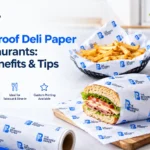
For a dine-in basket, the process may be even simpler. The sheet can act as a deli paper burger basket liner, giving the basket a cleaner appearance while catching some grease and crumbs.
The best fold is the one staff can repeat without slowing the line. A complicated fold may look attractive but create unnecessary labor during a lunch or dinner rush.
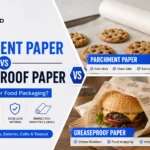
Deli Paper vs. Greaseproof Paper for Burgers
Deli paper and greaseproof paper can both work for burgers, but greaseproof paper is generally the stronger choice when the burger has a high grease or sauce load. Deli paper can be a practical everyday option when the grease level is moderate, and the burger is served within a shorter holding period.
The difference becomes more noticeable with heavy burgers.
| Factor | Deli Paper | Greaseproof Paper |
| Everyday burger wrapping | Excellent | Excellent |
| Moderate grease | Good | Excellent |
| Heavy grease and sauces | Depends on grade | Usually better suited |
| Basket lining | Excellent | Excellent |
| Lightweight handling | Excellent | Good to Excellent |
| Branding | Available on suitable grades | Available on suitable grades |
| Longer takeout holding | Test first | Often a better starting point |
The Branded Paper’s broader food-packaging guidance makes the same practical distinction: lighter deli paper can work for moderate grease loads, while richer and more heavily sauced foods may require stronger grease resistance.
That makes testing valuable. A paper that works perfectly for a cheeseburger served immediately may not perform as well after 20 or 30 minutes inside a takeout bag.
Is Deli Paper Suitable for Burger Takeout?
Deli paper can work well for burger takeout when the paper grade, size, and grease resistance match the holding conditions. Delivery adds another problem: the wrapper must perform inside the actual bag, box, or other outer package used by the restaurant.
A takeout burger can experience:
- Heat buildup
- Steam
- Condensation
- Grease migration
- Longer contact time
- Movement during transport
Packaging choices should therefore be tested in the real delivery setup. The Branded Paper recommends considering food temperature, moisture, grease level, holding time, and delivery method when selecting wrapping paper.
A useful test is simple: wrap a burger the same way employees normally do, place it in the normal takeout container, and hold it for the expected service period. Then check the bottom, sides, seams, and outer container for grease or moisture.
Can Deli Paper Be Used as a Burger Basket Liner?
Yes, deli paper can be used as a burger basket liner when the selected paper is appropriate for the food-contact application. It can improve presentation while creating a cleaner surface between the burger, fries, and serving basket.
Basket liners are useful because the same sheet can support both function and presentation.
For example, a restaurant can use printed deli sheets for:
- Burgers
- Fries
- Chicken sandwiches
- Onion rings
- Loaded fries
- Appetizers
- Sandwich baskets
This also makes branded packaging more consistent. A repeated logo or simple pattern can turn a plain basket into part of the restaurant experience.
Should Restaurants Use Printed Burger Wrapping Paper?
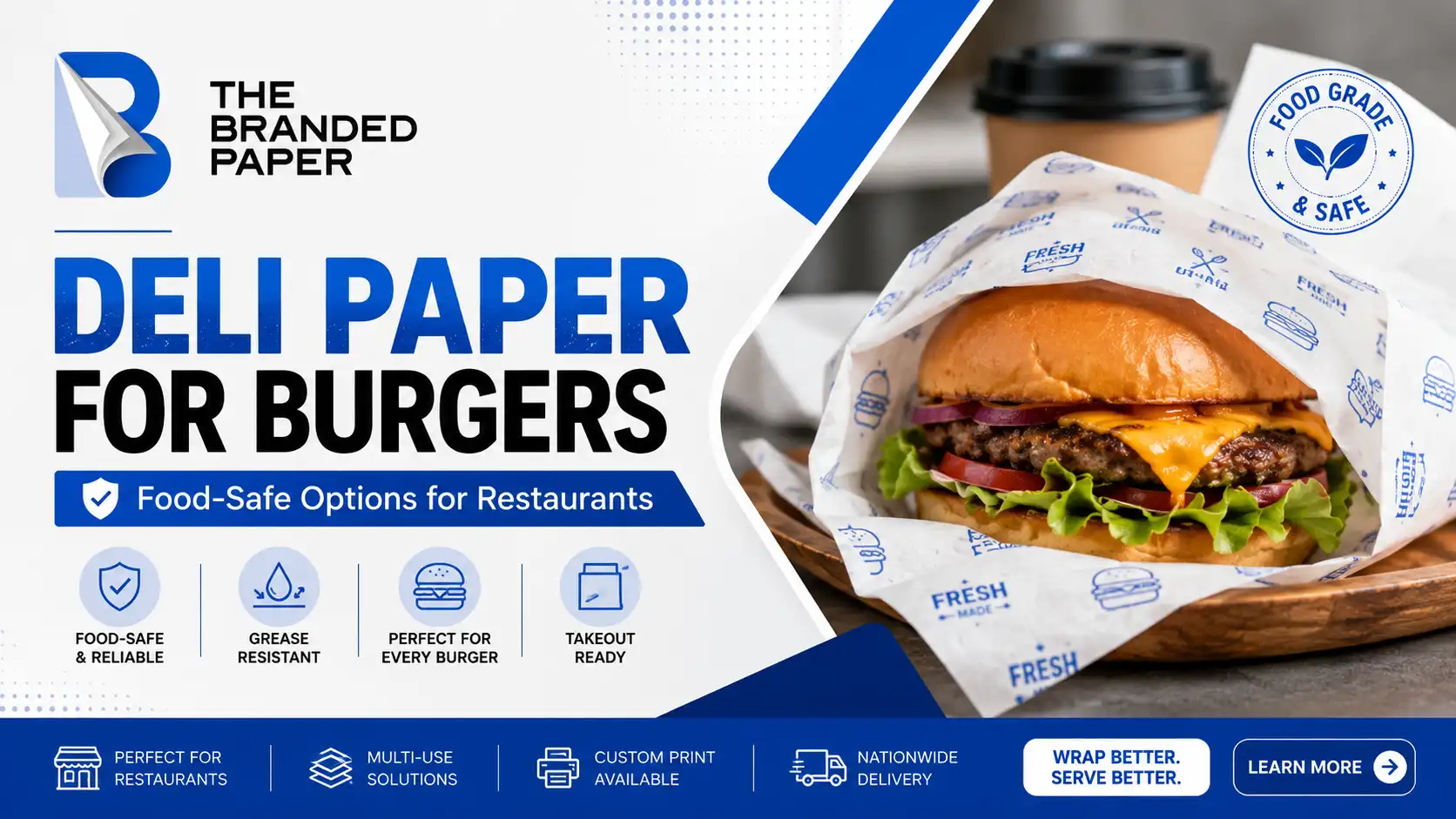
Printed burger wrapping paper gives restaurants a way to combine food protection and branding in the same packaging step. Instead of adding a sticker or separate branded insert, the wrapper itself can carry the restaurant’s visual identity.
The most practical designs are often simple:
- Repeated logo
- One-color brand mark
- Small pattern
- Short brand message
- Minimal branded graphics
The Branded Paper provides custom food paper with logo printing and describes branded sheets as useful for burgers, sandwiches, basket liners, and takeaway presentation.
For businesses already buying burger wrappers in bulk, custom printing can add a branding function without requiring another packaging component.
You can also review the broader custom burger wrapping paper options available from The Branded Paper for materials, sizes, printing, and ordering considerations. Custom Burger Wrapping Paper Guide
Common Mistakes When Choosing Burger Wrapping Paper
The most common packaging mistakes come from choosing paper based only on price or appearance instead of the burger’s actual service conditions. A low-cost sheet can become expensive when it causes tearing, leaks, messy presentation, or repeated wrapping.
Watch for these problems:
Choosing a sheet that is too small
A sheet that barely reaches around the burger can slow down prep and make the final package harder to secure.
Ignoring grease levels
A dry burger and a sauce-heavy burger do not need identical paper performance.
Using the wrong paper for heat
Not every food paper is intended for high-temperature use. Check the supplier’s specifications before using a material with very hot food.
Skipping real-world testing
A specification sheet cannot show exactly how a wrapper will behave with your burger, your sauces, your bag, and your normal holding time.
Overcomplicating the wrap
The most attractive fold is not always the most practical one. A restaurant needs a wrapping method staff can perform consistently during peak service.
Choosing branding before performance
A great logo print does not fix a wrapper that tears or leaks. Material performance should come first.
For more information about choosing paper for greasy foods, see The Branded Paper’s restaurant packaging guide for greasy food. Best Paper for Greasy Food
A Simple Buying Checklist for Restaurants
Before ordering burger wrapping paper, confirm these points with the supplier:
- Is the paper suitable for the intended direct food-contact application?
- How does it perform with grease and moisture?
- What burger paper size fits the menu?
- Will it work for dine-in, takeout, or both?
- Is the paper suitable for the expected temperature?
- Are sheets or rolls more efficient for the kitchen?
- Can the paper be custom printed?
- What quantity makes sense for your order volume?
- Can you test a sample before placing a large order?
For U.S. food businesses, The Branded Paper offers custom food packaging solutions and nationwide delivery, including custom deli paper and other printed food wrapping options.
Find the Best Burger Wrapping Paper for Your Restaurant
Deli paper for burgers works best when the paper is chosen around the burger, not simply around the product name. Grease level, moisture, temperature, size, holding time, and wrapping speed all affect the final result.
For lighter everyday burgers and fast counter service, deli paper can provide a simple and efficient solution. For very greasy or heavily sauced burgers, a stronger grease-resistant or greaseproof paper may be more appropriate. In either case, real-world testing is one of the best ways to confirm that the wrapper fits your menu and packaging process.
For restaurants that want to combine practical burger wrapping with brand presentation, custom printed deli paper can turn every wrapped order into a consistent part of the customer experience.
Frequently Asked Questions
1. Is deli paper food safe for burgers?
Deli paper can be used for burgers when it is manufactured and specified for the intended food-contact application. Restaurants should confirm food-contact suitability with the supplier rather than assuming every paper sheet is appropriate. FDA guidance explains that food-contact substances and packaging components are regulated according to their intended uses.
2. What is the best paper for wrapping burgers?
The best paper depends on the burger. Deli paper can work well for everyday service, while greaseproof paper may be better for burgers with heavy grease, sauces, or longer holding times.
3. What size paper is best for burgers?
There is no single size for every burger. The correct burger paper size depends on burger diameter, height, toppings, and folding method. Common food-paper sizes include 10″ × 10″, 12″ × 12″, and 15″ × 15″, and some suppliers offer custom sizes.
4. Can deli paper wrap greasy burgers?
Yes, but performance depends on the paper grade. For heavily greasy burgers, choose a paper specifically designed for stronger grease resistance rather than assuming standard deli paper will handle every application.
5. Can deli paper be printed with a logo?
Suitable deli and food-wrapping papers can be custom printed with logos or repeated brand patterns. The Branded Paper offers custom printed food paper for burgers, sandwiches, and other food-service applications.
6. Is deli paper good for burger takeout?
It can be, provided the paper suits the burger’s grease, heat, moisture, and holding time. The wrapper should also be tested inside the same bag or container used for actual delivery.
7. Can deli paper be used as a burger basket liner?
Yes. A properly specified deli sheet can be used as a liner for burgers, fries, and other basket-service foods, while also improving the presentation.
8. Does PFAS matter when choosing grease-resistant burger paper?
It can. FDA information states that PFAS-containing grease-proofing substances previously used on paper and paperboard food packaging are no longer being sold in the U.S. market for that use, following the phase-out and regulatory actions described by the agency. Restaurants should ask suppliers about the current material and compliance specifications for the product being purchased.