Choosing the right food wrapping paper can affect product quality, customer experience, and daily operations. Many food businesses use deli paper, wax paper, and parchment paper, but these materials are not designed for the same purpose.
A burger shop may need paper that handles grease without tearing. A bakery may need heat-resistant paper for baking. A restaurant offering takeaway meals may need packaging that keeps food fresh while creating a professional presentation.
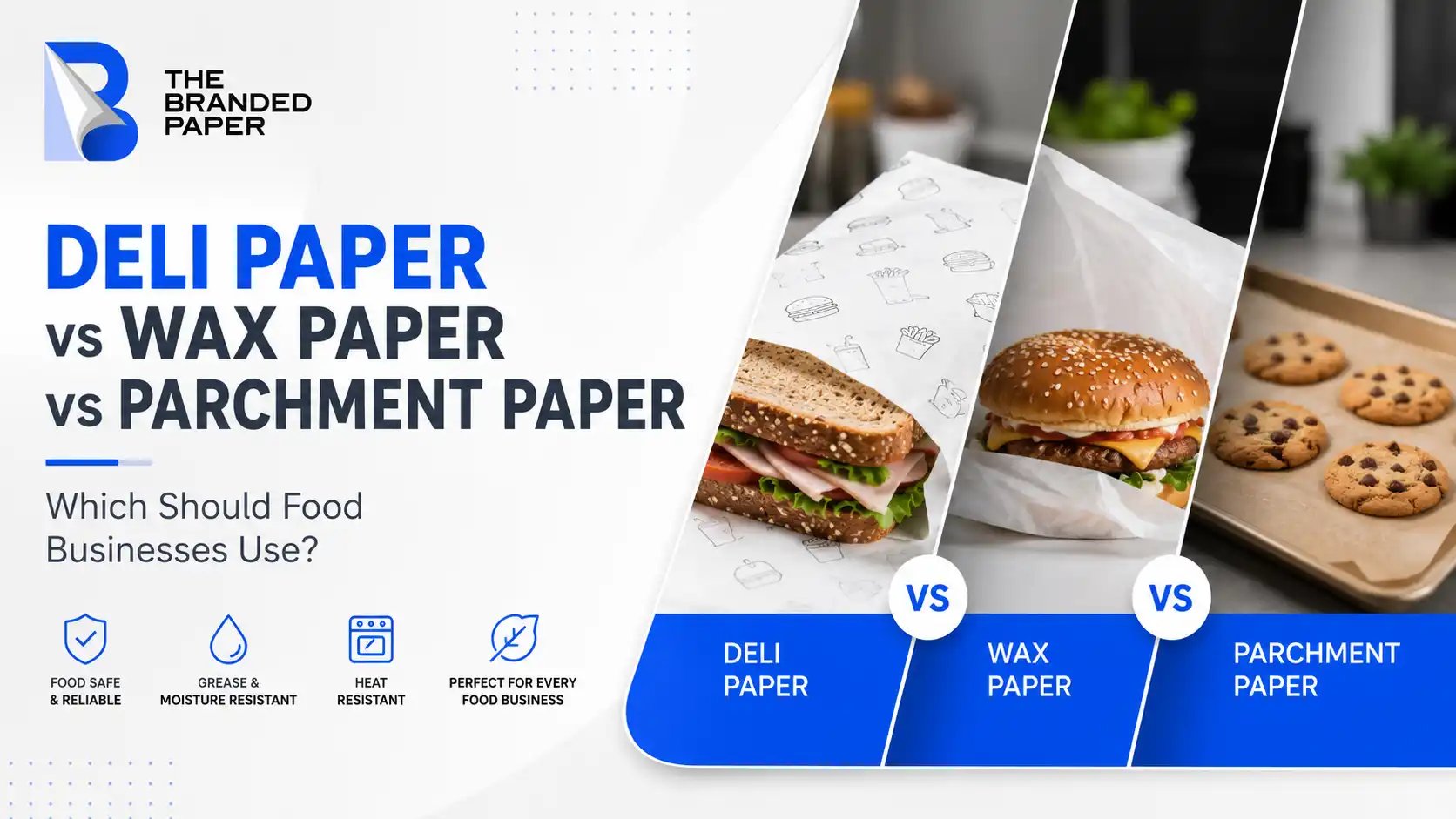
Understanding the difference between Deli Paper vs Wax Paper vs Parchment Paper helps food businesses choose the right material for sandwiches, burgers, baked goods, and other food products.
Deli Paper vs Wax Paper vs Parchment Paper: Quick Comparison
| Feature | Deli Paper | Wax Paper | Parchment Paper |
| Main Use | Wrapping sandwiches, burgers, deli foods | Wrapping cold or room-temperature foods | Baking and heat-resistant cooking |
| Heat Resistance | Limited | Low | High |
| Grease Resistance | Good | Excellent | Excellent |
| Best For | Restaurants, cafes, food trucks | Food storage and wrapping | Bakeries and kitchens |
| Oven Safe | No | No | Yes |
| Custom Printing | Commonly available | Less common | Available but usually for specific applications |
| Food Presentation | Excellent | Average | Good |
Each paper type solves a different problem. The best choice depends on how your business prepares, stores, and serves food.
What Is Deli Paper Used For?
Deli paper is a thin food-safe sheet commonly used by restaurants, sandwich shops, cafes, and food trucks. It is designed for quick wrapping, serving, and presentation.
Many businesses use deli sheets for sandwiches because they are lightweight, easy to handle, and help create a clean serving experience.
Common uses include:
- Sandwich wrapping
- Burger wrapping
- Food basket liners
- Bakery item wrapping
- Takeout packaging
- Counter service presentation
Deli paper is especially useful when speed matters. Employees can quickly wrap food items during busy hours without dealing with bulky packaging.
For example, a burger restaurant handling hundreds of orders daily needs packaging that is easy to fold, stack, and store. Deli paper helps create a smoother workflow while keeping food presentation consistent.
Benefits of Deli Paper for Food Businesses
Deli paper offers several advantages:
- Easy handling: Employees can wrap food quickly during busy periods.
- Better presentation: Printed or branded sheets can improve the customer experience.
- Lightweight storage: Large quantities take less space compared to boxes or containers.
- Versatile use: Works well for sandwiches, burgers, fries, and bakery products.
For businesses focused on branding, custom deli paper also creates an opportunity to turn simple wrapping into part of the customer experience.
Wax Paper vs Parchment Paper: What Is the Difference?
The difference between Wax paper and parchment paper mainly comes down to their coating and heat performance.
Wax paper has a thin layer of wax coating that creates a moisture-resistant surface. It works well for wrapping foods but should not be exposed to high heat.
Parchment paper uses a silicone coating that provides a non-stick surface and allows it to handle oven temperatures.
Wax Paper Uses
Common wax-coated paper uses include:
- Wrapping sandwiches
- Separating baked goods before storage
- Covering food in refrigerators
- Preventing food from sticking together
Wax paper works well for cold food preparation, but it is not suitable for baking.
A common mistake is using wax paper as a replacement for parchment paper in the oven. The wax coating can melt when exposed to high temperatures.
Can You Bake With Wax Paper?
No, wax paper is not recommended for baking.
When heated, the wax coating can melt and transfer onto food. For baking cookies, pastries, or other oven items, parchment paper is the safer choice.
Parchment Paper Uses in Cooking
Parchment paper is mainly used in kitchens where heat resistance and non-stick performance are important.
Common parchment paper uses in cooking include:
- Baking cookies
- Roasting vegetables
- Preparing pastries
- Lining baking trays
- Preventing food from sticking
Many bakeries rely on parchment paper because it reduces cleanup time and helps maintain consistent baking results.
However, parchment paper is not always the best choice for food wrapping. It can be more expensive than deli paper and may not provide the same branding opportunities for takeaway businesses.
Deli Paper vs Parchment Paper: Which One Is Better?
The choice between deli paper and parchment paper depends on how the paper will be used.
Choose Deli Paper When:
Deli paper is better for:
- Sandwich shops
- Burger restaurants
- Cafes
- Food trucks
- Takeout businesses
It works well when the goal is quick serving, attractive presentation, and easy handling.
Choose Parchment Paper When:
Parchment paper is better for:
- Bakeries
- Commercial kitchens
- Food preparation areas
- Oven-based cooking
It provides better heat resistance and prevents food from sticking.
A sandwich shop usually does not need parchment paper for every order because the food is already cooked. A bakery, however, may depend on parchment paper for daily production.
Is Deli Paper the Same as Wax Paper?
No, deli paper and wax paper are different materials.
Deli paper is usually designed for food presentation and wrapping, while wax paper has a moisture-resistant wax coating.
Key differences:
| Deli Paper | Wax Paper |
| Used mainly for serving food | Used mainly for storage and wrapping |
| Common in restaurants | Common in home kitchens |
| Available with custom printing | Usually plain |
| Designed for presentation | Designed for moisture protection |
For restaurants that want branded food packaging, deli paper is often the better option because it combines function with visual appeal.
Greaseproof Paper vs Wax Paper vs Parchment Paper
Many food businesses also compare greaseproof paper with other wrapping materials.
Greaseproof paper is designed to resist oil and grease, making it useful for foods like:
- Burgers
- Fried foods
- Pastries
- Sandwiches
The main difference is performance:
| Paper Type | Best Feature | Common Use |
| Greaseproof Paper | Handles oily foods | Burgers and fried items |
| Wax Paper | Moisture protection | Cold food storage |
| Parchment Paper | Heat resistance | Baking and cooking |
| Deli Paper | Fast wrapping and branding | Restaurants and cafes |
Choosing the wrong paper can create problems such as leaks, messy packaging, or poor customer presentation.
Best Paper for Sandwich Wrapping and Burgers
For sandwiches and burgers, businesses usually need paper that balances:
- Grease resistance
- Easy folding
- Food safety
- Good appearance
- Brand visibility
Deli paper and greaseproof paper are commonly preferred because they are practical for fast-moving food environments.
A takeaway restaurant may use custom-printed deli paper to:
- Add branding to every order
- Create a memorable unboxing experience
- Make packaging look more professional
- Reduce the need for extra labels
What Paper Should I Use for Food Packaging?
The right choice depends on your food product and business needs.
For Restaurants and Cafes
Recommended:
- Deli paper
- Greaseproof paper
- Custom printed food wrapping sheets
Best for:
- Sandwiches
- Burgers
- Wraps
- Snacks
For Bakeries
Recommended:
- Parchment paper
- Bakery wrapping paper
- Food-safe boxes
Best for:
- Cookies
- Cakes
- Pastries
For Food Storage
Recommended:
- Wax paper
- Freezer-safe wrapping materials
Best for:
- Separating food
- Short-term storage
How Custom Food Packaging Helps Businesses Stand Out
Food packaging is not only about protecting products. It also plays a role in how customers remember a brand.
Custom printed deli paper allows businesses to add:
- Logos
- Brand colors
- Unique designs
- Marketing messages
A customer holding a branded burger wrapper is interacting with your business before they even taste the food.
For restaurants competing in crowded markets, small packaging details can help create a stronger brand image.
The Branded Paper helps restaurants, bakeries, cafés, food trucks, and growing food brands create custom food packaging that combines reliable performance with professional branding.
Common Mistakes Businesses Make When Choosing Food Wrapping Paper
Using the Wrong Paper for Hot Foods
Wax paper may look similar to parchment paper, but it is not designed for high temperatures.
Choosing Based Only on Price
The cheapest paper option may create problems with grease leaks, poor presentation, or customer complaints.
Ignoring Branding Opportunities
Plain packaging works, but custom printed food packaging can help businesses create stronger brand recognition.
Not Considering Food Type
A greasy burger and a delicate pastry need different packaging solutions.
Deli Paper vs Wax Paper vs Parchment Paper: Which One Should You Choose?
There is no single best paper for every food business.
- Choose deli paper for sandwiches, burgers, cafes, and takeaway meals.
- Choose wax paper for cold food wrapping and storage.
- Choose parchment paper for baking and heat-based cooking.
- Choose greaseproof paper for oily foods that need extra protection.
The right material improves food handling, protects product quality, and creates a better customer experience.
For businesses looking to improve their packaging presentation, custom food wrapping solutions can help combine practical performance with professional branding.
Frequently Asked Questions
1. Is deli paper safe for food?
Yes, food-grade deli paper is designed for direct contact with food when manufactured according to food safety standards.
2. Can you use deli paper instead of parchment paper?
It depends on the purpose. Deli paper can replace parchment paper for wrapping and serving, but it should not replace parchment paper for baking.
3. Can parchment paper be used for wrapping sandwiches?
Yes, but it may not be the most cost-effective choice for restaurants because deli paper is usually designed specifically for fast food wrapping.
4. What is the difference between deli paper and greaseproof paper?
Deli paper is mainly used for wrapping and presentation, while greaseproof paper focuses more on resisting oil and grease.
5. Is wax paper better than parchment paper?
Neither is better overall. Wax paper works for cold wrapping, while parchment paper is better for baking and heat applications.
6. What is the best paper for wrapping burgers?
Greaseproof paper and deli paper are commonly used for burgers because they handle grease well and provide easy serving.