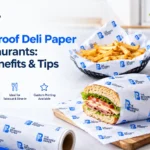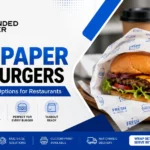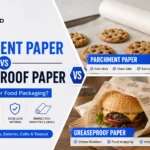
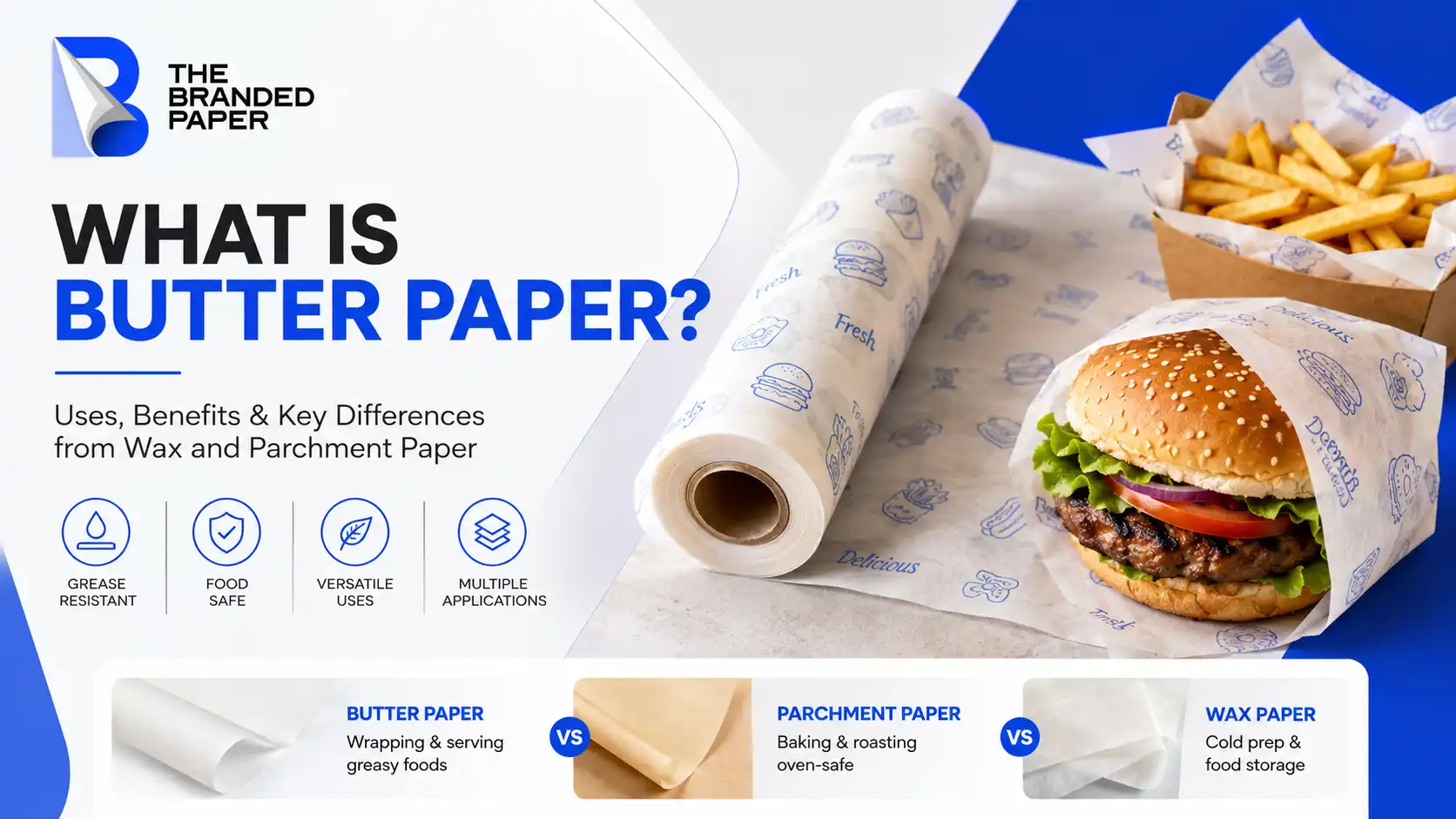
What is butter paper? It is a grease-resistant paper commonly used to wrap butter, baked goods, sandwiches, burgers, and other oily foods. In the United States, the term is less common than greaseproof paper, deli paper, or food wrapping paper.
The name is often confusing because some sellers use “butter paper” for parchment paper, while others use it for wax paper or greaseproof wrapping sheets. These materials may look similar, but they do not perform the same way under heat.
The safest rule is simple: never judge cooking paper by its appearance or name alone. Check whether the package specifically says oven-safe, microwave-safe, food-safe, or suitable for direct food contact.
What Is Butter Paper Made Of?
Traditional Butter paper is a dense, grease-resistant paper designed to stop oil and fat from soaking through. Merriam-Webster defines butter paper as greaseproof paper used for wrapping butter or lard. Cambridge Dictionary also describes it as paper that prevents oil from passing through and is used for cooking or wrapping fatty foods.
Depending on the manufacturer, the paper may receive mechanical or chemical treatment that closes spaces between its fibers. Some products may also have a coating that improves resistance to grease, moisture, or sticking.
This is where product names become unreliable. A sheet sold as butter paper may be:
- Uncoated greaseproof paper
- Vegetable parchment
- Silicone-treated baking parchment
- Wax-coated food paper
- Printed food wrapping paper
- Deli or basket-lining paper
These papers are not automatically interchangeable. A grease-resistant wrapping sheet may work perfectly around a burger but fail when placed in a 400°F oven.
Butter Paper Is Mainly a Packaging Term
In U.S. food service, butter paper is more accurately understood as greaseproof food wrapping paper rather than a universal baking product.
It is commonly used by:
- Bakeries
- Cafés
- Delis
- Burger restaurants
- Sandwich shops
- Food trucks
- Dessert businesses
- Takeout kitchens
The paper creates a clean barrier between the food, the customer’s hands, and the outer packaging. It also helps contain light grease from foods such as pastries, fries, cookies, sandwiches, and wraps.
The FDA recognizes grease resistance as an important function of food-contact packaging. It also regulates substances used in materials that come into contact with food, including packaging components designed to prevent grease from leaking through paper or cardboard.
Butter Paper vs Parchment Paper vs Wax Paper
The biggest difference is not color or thickness. It is how the paper has been treated and what temperature it can safely handle.
| Paper type | Main purpose | Typical surface treatment | Heat use | Best applications |
| Butter paper | Wrapping and serving greasy foods | Grease-resistant treatment; coating varies | Depends on the product | Burgers, pastries, sandwiches, basket liners |
| Parchment paper | Baking, roasting and pan lining | Parchmentized or silicone-coated surface | Oven-safe within the stated limit | Cookies, cakes, bread, vegetables |
| Wax paper | Cold preparation and food storage | Paraffin, soybean or another wax coating | Generally not oven-safe | Candy work, counters, separating foods |
| Aluminum foil | Covering, grilling and high-heat cooking | Thin aluminum sheet | Suitable for many high-heat uses | Roasting, covering casseroles, grilling |
| Silicone baking mat | Reusable baking surface | Food-grade silicone | Heat limit varies by brand | Cookies, pastries and repeated baking |
The table gives general uses. The instructions printed by the manufacturer should always take priority.
Is Butter Paper the Same as Parchment Paper?
Butter paper and parchment paper are not always the same product.
Parchment paper is made specifically to resist heat, grease, moisture, and sticking during baking. Many modern parchment products have a light silicone coating that creates a nonstick surface. King Arthur Baking, for example, describes its unbleached parchment as silicone-coated, reusable, and oven-safe up to 450°F.
Butter paper is a broader and less controlled term. It may refer to genuine vegetable parchment in some markets, but it may also mean greaseproof wrapping paper that has no verified oven rating.
Before replacing parchment with butter paper, check the packaging for:
- A stated oven temperature
- Instructions for baking or roasting
- Microwave suitability
- Food-contact suitability
- Warnings about flames, heating elements or broilers
Without those details, use butter paper for wrapping and serving rather than baking.
What Is Butter Paper Used For?
Butter paper is useful anywhere grease control, handling, and food presentation matter.
Wrapping Burgers and Sandwiches
A grease-resistant sheet helps hold sauces, melted cheese, oils, and crumbs inside the wrap. It gives the customer a cleaner way to eat while protecting the bag or box around the food.
Lining Food Baskets
Restaurants often line baskets and trays with printed greaseproof paper. The liner reduces direct contact with the serving surface and makes cleanup easier between orders.
Packaging Baked Goods
Cookies, brownies, croissants, doughnuts, and other baked products can release butter or oil after cooling. Butter paper helps prevent grease marks on boxes and bags.
Separating Food Items
Small sheets can separate cookies, pastries, cheese slices, burger patties, or sticky products during storage and display.
Supporting Branded Presentation
Custom-printed butter paper can place a logo, pattern, slogan, or social media handle directly around the food. Unlike a sticker on the outer bag, the branding remains visible while the customer is eating.
For cafés and takeout businesses, that repeated visibility can make ordinary packaging feel more intentional without adding another container.
Benefits of Butter Paper for Food Businesses
Cleaner Food Handling
Greaseproof paper creates a practical layer between hands and food. It helps customers manage messy products such as burgers, loaded sandwiches, pastries, and fried snacks.
Better Grease Control
The paper slows oil from reaching trays, cartons, bags, counters, and clothing. Performance still depends on the paper’s grease resistance, food temperature, oil content, and holding time.
A light pastry and a hot burger with sauce place very different demands on packaging.
Faster Service
Precut sheets are easy to grab, fold, wrap, and replace. Staff do not need to measure paper from a roll during busy service periods.
More Consistent Presentation
Using one paper size and print pattern across orders creates a more controlled appearance. That matters when customers photograph food for reviews or social media.
Flexible Branding
Printed food paper can be used across several menu items rather than ordering a different printed box for every product. It may fit burgers, sandwiches, pastries, basket liners, and takeout trays.
Can Butter Paper Be Used in the Oven?
Only when the manufacturer clearly identifies it as oven-safe paper for baking.
The words “butter paper,” “greaseproof,” or “food-safe” do not prove that the sheet can withstand oven temperatures. Food-contact safety and heat safety are separate requirements.
Use butter paper in the oven only when the packaging provides:
- A maximum temperature
- Approved appliance types
- Cooking instructions
- Flame and heating-element warnings
When no oven rating appears, switch to parchment paper or another material specifically approved for the cooking method.
Can Parchment Paper Go in the Oven?
Yes. Parchment paper is designed for baking and roasting, but its temperature limit varies.
Reynolds states that its parchment paper is oven-safe up to 425°F and should not touch an open flame, oven wall, heating element, or broiling unit. King Arthur lists a 450°F limit for some professional-grade sheets.
That difference matters. There is no single parchment paper temperature limit for every product.
Always check the box before baking at high heat. Replace the sheet when it becomes:
- Dark brown
- Brittle
- Heavily curled
- Greasy
- Torn
- Burned around the edges
Can Parchment Paper Go Under the Broiler?
Generally, no.
A broiler exposes the paper to intense direct heat. Parchment can scorch, smoke, or ignite if it reaches the heating element or flame. Reynolds specifically advises against using its parchment with a broiler or toaster oven.
Use a broiler-safe pan or foil when the appliance instructions permit it.
Parchment Paper vs Wax Paper
Parchment and wax paper both help prevent sticking, but only one is normally suitable for exposed oven use.
Parchment paper receives heat-resistant treatment and is commonly used for cookies, cakes, roasting, and cooking packets.
Wax paper has a thin wax coating. It is better suited to:
- Rolling dough
- Separating frozen foods
- Wrapping candy
- Covering countertops
- Chilling no-bake desserts
- Storing sandwiches and cheese
Wax can melt or smoke under oven heat. Reynolds states that both wax and parchment paper can be microwave-safe, but only its parchment paper is approved for oven use up to 425°F.
Do not use wax paper as a general parchment paper substitute for baking.
Baking Paper vs Parchment Paper
In most U.S. cooking contexts, baking paper and parchment paper refer to the same type of heat-resistant, nonstick baking sheet.
The terms may differ by country, brand, or retailer. The product label still matters because coating type, thickness, heat rating, and compostability can vary.
Greaseproof paper vs parchment paper is a more important distinction. Greaseproof paper blocks oil, but it may not have the nonstick surface or high-temperature rating needed for baking.
How to Use Parchment Paper for Baking
Parchment Paper for Cookies
Place a sheet flat on the baking pan and arrange the dough with enough space for spreading. Parchment can reduce sticking and make it easier to move cookies to a cooling rack.
It may also produce different browning than foil or a bare dark pan because the materials transfer heat differently.
Parchment Paper for Cake Pans
For round cakes:
- Place the pan over the paper.
- Trace the base.
- Cut out the circle.
- Lightly grease the pan when the recipe requires it.
- Press the parchment into the bottom.
- Add the batter.
For brownies and loaf-style bakes, create a parchment sling by leaving paper over two opposite sides of the pan. The overhang makes the cooled bake easier to lift out. King Arthur recommends laying the sheet flat across the bottom and leaving enough paper over the sides to act as handles.
Do You Need to Grease Parchment Paper?
Not always.
Parchment already provides a nonstick surface, but some recipes still require greasing for texture, release, or edge protection. King Arthur recommends following the specific recipe rather than assuming parchment replaces every greasing step.
A small amount of grease beneath the paper can also stop it from sliding while batter is poured.
Which Side of Parchment Paper Goes Up?
Most modern parchment paper is coated on both sides, so either side can face the food. King Arthur describes its parchment sheets as coated on both sides.
Some specialty products may be treated on only one side. Follow any arrows, labels, or coating instructions printed on the box.
Can You Put Parchment Paper in an Air Fryer?
It depends on the air fryer and liner design.
Loose paper can block airflow or lift toward the heating element. Philips warns that covering the basket bottom can reduce cooking performance and that unsecured baking paper may be pulled into the heating element and burn.
Some manufacturers sell air fryer parchment paper liners designed for specific basket sizes. These may contain holes or shapes that support airflow.
Use air fryer paper safely by following these rules:
- Check the appliance manual first.
- Use liners designed for air fryers.
- Never place loose paper in an empty basket during preheating.
- Put enough food on top to hold the liner down.
- Do not cover every airflow opening.
- Keep the paper away from the heating element.
- Stay within the liner’s temperature rating.
COSORI similarly warns users not to preheat with an empty paper liner and to weigh it down with food so it cannot reach the upper heating element.
Can You Microwave Parchment Paper?
Yes, many parchment products are microwave-safe.
The USDA lists parchment paper, wax paper, cooking bags, and white microwave-safe paper towels among materials that should be safe for microwave use. It warns against brown paper bags, newspapers, aluminum foil, and thin plastic storage bags.
Keep these precautions in mind:
- Confirm the package says microwave-safe.
- Use a microwave-safe plate or bowl.
- Do not allow the paper to contact a grill element.
- Avoid metallic printing or decoration.
- Do not run the microwave with only an empty sheet inside.
Parchment Paper vs Aluminum Foil for Baking
Parchment and foil solve different cooking problems.
Choose parchment paper when you need:
- A nonstick baking surface
- Easy cookie release
- A liner for cake pans
- Less scrubbing
- A surface for bread or pastry dough
Choose foil when you need:
- Strong shaping
- High-heat cooking
- Broiling when approved
- Covering a casserole
- Holding moisture around food
- Grilling when approved
Foil transfers heat more directly and may increase browning on the bottom of food. Parchment creates a softer barrier between the food and pan.
Neither material is automatically better. The right choice depends on the recipe, temperature, desired browning, and appliance instructions.
Best Parchment Paper Substitutes for Baking
No substitute works for every recipe.
| Substitute | Best use | Main limitation |
| Silicone baking mat | Cookies, pastries and repeated baking | May change spreading or browning |
| Greased baking pan | Cakes, breads and some cookies | More cleanup and possible sticking |
| Aluminum foil | Roasting and firm foods | Not naturally nonstick |
| Nonstick baking pan | Simple recipes | Coating condition affects performance |
| Flour-and-grease method | Cake pans | Can leave flour marks |
| Oven-safe cooking spray | Quick pan preparation | Not suitable for every recipe |
A silicone baking mat vs parchment paper decision usually comes down to convenience and baking behavior. Silicone mats are reusable, while parchment is easier to cut for different pans and discard after messy recipes.
Do not substitute newspaper, grocery bags, freezer paper, standard printed wrapping paper, or unverified butter paper.
Can You Reuse Parchment Paper?
Parchment can often be reused when it remains clean and structurally sound.
King Arthur recommends reusing it only after baking rather than after contact with raw dough preparation, and only when it can be wiped clean without sticky or burned residue.
Reuse it for another similar batch when the sheet is:
- Dry
- Clean
- Flat enough to handle
- Free from burned food
- Not heavily saturated with grease
- Still below its temperature limit
Discard it after contact with raw meat, heavy sauce, burned sugar, or ingredients that create cross-contamination concerns.
Bleached vs Unbleached Parchment Paper
Bleached parchment is usually white. Unbleached parchment has a natural brown appearance.
For everyday baking, the performance difference is often less important than:
- Heat rating
- Coating
- Thickness
- Sheet strength
- Food-contact suitability
- Compostability certification
- Responsible fiber sourcing
An unbleached appearance does not automatically make a product compostable, safer, or coating-free. Read the packaging rather than relying on color.
Some products are specifically tested for home composting. Reynolds, for example, labels its unbleached parchment as chlorine-free, responsibly sourced, and home compostable.
Is Parchment Paper Compostable or Biodegradable?
Paper fiber is biodegradable, but the finished product may include coatings, treatments, food residue, or grease that change how it should be discarded.
The most reliable approach is to check for a clear claim such as:
- Home compostable
- Commercially compostable
- Certified compostable
- Uncoated
- Approved by the local composting program
Do not assume every brown or unbleached sheet belongs in a compost bin. Product construction and local facility rules differ.
Heavily greasy paper may also break down slowly or attract pests in a home compost pile. Tear approved parchment into smaller pieces and mix it with other compost material rather than adding large folded sheets.
How Food Businesses Should Choose Butter Paper
An attractive print is useless when the paper fails during service.
Before ordering food wrapping paper, consider the actual conditions in which it will be used.
Match the Paper to the Food
Ask how much grease, sauce, steam, and moisture the food releases. A dry cookie needs less protection than a hot cheeseburger or buttery croissant.
Consider Holding Time
A sheet that performs well for five minutes may weaken during a 30-minute delivery. Test it with the real product, serving temperature, and expected travel time.
Choose the Right Size
Oversized sheets increase material use and slow wrapping. Undersized sheets leave food exposed and create messy folds.
Confirm Food-Contact Suitability
Printed paper, coatings, adhesives, and other packaging components must be suitable for their intended food-contact conditions. FDA guidance makes clear that the regulatory status of a food-contact material depends on the substances that make up the final material and their intended use.
Test the Print in Real Service
Dark designs may hide oil spots, but heavy ink coverage can also change the appearance or feel of the sheet. Request a sample and test:
- Folding
- Grease resistance
- Ink quality
- Food presentation
- Wrap speed
- Delivery performance
Businesses exploring custom greaseproof sheets can use The Branded Paper to compare paper sizes, printing options, and food applications before committing to a larger packaging order.
Common Mistakes to Avoid
- Assuming all brown paper is parchment
- Using wax paper under exposed oven heat
- Treating “food-safe” as meaning “oven-safe”
- Placing loose parchment in an empty air fryer
- Exceeding the temperature printed on the box
- Letting parchment touch a flame or heating element
- Using greasy wrapping paper for a long delivery without testing it
- Ordering custom paper based only on price
- Claiming compostability without product certification
- Reusing paper that is burned, torn, or contaminated
Final Takeaway
Butter paper is best understood as grease-resistant paper used for wrapping and presenting food. It is not automatically parchment paper, wax paper, or an oven-safe baking sheet.
Use parchment when verified heat resistance and nonstick baking performance matter. Use wax paper for appropriate cold preparation and storage. Use greaseproof butter paper for wrapping, lining, serving, and branded food presentation.
The product label should settle every heat-related decision. When choosing custom food paper for a business, test the material with the real food, temperature, grease level, and delivery time before placing a full order.
Frequently Asked Questions
1. Is butter paper the same as wax paper?
Not necessarily. Butter paper usually means greaseproof wrapping paper, while wax paper has a wax-coated surface. Some sellers may use the names loosely, so check the material description and usage instructions.
2. Can butter paper be used for baking cookies?
Only when the package says it is oven-safe and provides a temperature rating. Use verified parchment paper when those instructions are missing.
3. Can butter paper be used in an air fryer?
Do not use it unless both the paper manufacturer and air fryer manufacturer allow it. Loose paper may block airflow or rise into the heating element.
4. Is butter paper waterproof?
It is usually grease-resistant rather than fully waterproof. Moisture, sauces, steam, oil level, and holding time can eventually weaken some papers.
5. Can parchment paper catch fire?
Yes. Parchment can scorch or ignite when exposed to an open flame, a heating element, a broiler, or temperatures beyond its stated limit.
6. Can parchment paper be used on both sides?
Most parchment is coated on both sides, allowing either side to face upward. Check the packaging for exceptions.
7. Is wax paper safe in the microwave?
Many wax paper products are microwave-safe, but the package instructions should be checked before use. Do not treat microwave safety as proof of oven safety.
8. What paper is best for wrapping burgers?
Greaseproof food paper sized for the burger, grease level, sauce content, and holding time is usually the practical choice. For branded service, use custom-printed food-contact paper rather than ordinary craft or printing paper.