Our Blogs

Our clients consistently value our accuracy, professionalism, and smooth delivery process. 

aper for Wrapping Sandwiches with deli, greaseproof, wax, and parchment paper options

What Paper Do Restaurants Use to Wrap Sandwiches? Best Options Explained

Not every sheet of paper belongs around a sandwich. Some papers handle grease well but struggle with moisture. Others keep food neat but are unnecessary for a simple cold sandwich. The best paper for wrapping sandwiches depends on what is inside the sandwich, how hot it is, how long it will stay wrapped, and whether it is being served in-store, carried away, or delivered. Restaurants commonly use deli paper, greaseproof paper, wax paper, and food-grade wrapping paper. Parchment can also work in certain situations. The right choice keeps the sandwich easier to hold, limits grease marks, supports a cleaner presentation, and helps the kitchen pack orders faster. What Paper Is Used to Wrap Sandwiches? For most restaurants, deli paper and greaseproof paper are the best choices for wrapping sandwiches. Deli paper works well for everyday sandwiches, subs, wraps, burgers, and counter service. Greaseproof paper is usually the better choice when sandwiches contain oily fillings, melted cheese, sauces, butter, or grilled ingredients. Wax paper can be useful for cold or room-temperature foods, while parchment paper makes more sense when heat resistance is part of the job. Paper Type Best For Grease Resistance Heat Use Restaurant Fit Deli paper Subs, sandwiches, wraps Good Limited Excellent Greaseproof paper Hot, oily, saucy sandwiches High Depends on grade Excellent Wax paper Cold sandwiches, storage Good Low Good Parchment paper Warm food, kitchen prep High High within rated limits Moderate Butcher paper Large or heavy sandwiches Moderate Varies Situational Kraft food paper Rustic presentation, light foods Varies Varies Situational Restaurants already use these paper types for different food-service jobs, and the material should be selected around the food rather than its name alone. Deli Paper Is the Everyday Choice for Sandwich Shops Deli paper for sandwiches works because it is simple, light, and fast to handle. During a lunch rush, employees do not want packaging that takes several steps to close. A properly sized deli sheet can be placed under the sandwich, folded around it, and handed to the customer within seconds. It is commonly useful for: Cold deli sandwiches Subs and hoagies Breakfast sandwiches Wraps Burgers Bagels Pastries Basket and tray liners Deli paper also gives restaurants flexibility. The same sheet may serve as the wrapping, a food liner, or part of the final presentation. That can matter more than it sounds. If a sandwich shop serves hundreds of orders each day, even a small packaging step repeated on every order affects prep speed. Easy-to-grab sheets can be more practical than bulky packaging that needs assembly. Is Deli Paper the Same as Wax Paper? Not necessarily. “Deli paper” describes a food-service use more than one exact material construction. Depending on the supplier, deli sheets may have different grease-resistant or moisture-resistant properties. Wax paper specifically uses a wax treatment to help create a moisture-resistant surface. For a restaurant buyer, the better question is not simply whether the sheet is called deli paper. Ask what it is designed to handle: Direct food contact Oil and grease Moisture Warm food Printing Folding Short-term holding Those details tell you more than the product name. Greaseproof Paper Works Better for Messy Sandwiches A turkey sandwich with lettuce behaves very differently from a cheesesteak loaded with melted cheese and sauce. That is where greaseproof paper for sandwiches becomes useful. Greaseproof paper is designed to slow oil and grease from passing through the sheet. It can help keep the outside of the package cleaner when wrapping foods with fatty or oily ingredients. It is a strong choice for: Grilled sandwiches Cheesesteaks Breakfast sandwiches Burgers Melted cheese sandwiches Sandwiches with mayonnaise or oily sauces Fried chicken sandwiches Foods served with butter or dressing The biggest benefit is not simply appearance. When grease quickly passes through weak wrapping paper, customers may end up with oily hands, stained bags, or a wrapper that becomes difficult to hold. A suitable grease-resistant paper for food wrapping creates a better barrier between the sandwich and everything around it. More Grease Resistance Is Not Always Better Packaging buyers sometimes choose the heaviest or strongest barrier they can find. That can add cost without solving a real problem. A cold turkey sandwich may only need a lightweight deli sheet. A double cheeseburger with sauce may need a much stronger grease barrier. Matching the material to the menu usually makes more sense than putting every item in the same high-performance paper. Wax Paper Works Best Away From High Heat Wax paper for sandwiches can work well when the food is cold or near room temperature. The wax treatment helps the sheet resist moisture and sticking, making it useful for: Cold sandwiches Bakery items Cheese Prepared snacks Food separation Short-term refrigerated storage Wax paper should not automatically be treated as a replacement for parchment paper. Wax-treated sheets generally are not selected for ovens or other high-heat cooking applications. Parchment is designed for heat-related kitchen jobs where the product is rated for those temperatures. Can You Wrap Sandwiches in Wax Paper? Yes, when the paper is intended for direct food contact, and the sandwich suits the material. It can be practical for cold lunches, deli items, and food that will be eaten fairly soon. For very hot, greasy, or saucy sandwiches, greaseproof food wrapping paper may be a better fit. Parchment Paper Can Wrap Sandwiches, but It Is Often More Than You Need Can you wrap sandwiches in parchment paper? Yes. Parchment has good release properties and is known for handling heat better than wax paper. That makes it useful in bakeries and kitchens for baking, roasting, tray lining, and other heated food preparation. For basic sandwich service, however, parchment may provide features the restaurant does not need. A cold sandwich shop usually cares more about: Fast folding Grease control Easy stacking Cost per order Print quality Customer presentation Deli or greaseproof sandwich wrapping paper often matches those needs more closely. Parchment makes more sense when the same paper also needs to perform a heat-related kitchen task. What About Butcher Paper and
Read More »
Personalized parchment paper printed with a custom logo for restaurant and bakery food packaging

Personalized Parchment Paper for Food Businesses: Benefits, Uses & Branding Ideas

Plain parchment paper can protect food, simplify cleanup, and improve presentation. Personalized parchment paper does the same job while adding something standard paper cannot: your brand. For restaurants, bakeries, cafés, delis, food trucks, and growing food brands, small packaging details matter. A burger wrapped in paper printed with your logo feels different from one served in a plain white sheet. The food may be identical, but the branded presentation feels more intentional. That does not mean every business should order custom parchment without checking the details. Paper type, size, coating, printing method, heat resistance, and intended food use all affect performance. Understanding those factors makes it easier to choose packaging that looks good and works well during a busy service. What Is Personalized Parchment Paper? Personalized parchment paper is parchment-style food paper printed with a business logo, pattern, message, or other brand artwork. Depending on the product specification, it may be used for: Wrapping sandwiches and burgers Lining baskets and trays Presenting cookies and pastries Separating baked goods Packaging bakery orders Serving café and deli foods Adding branded presentation inside boxes The main difference between standard and personalized parchment is simple: plain paper performs a packaging function, while personalized paper can perform a packaging and branding function at the same time. For a food business sending hundreds of orders through its counter, pickup area, or delivery operation, that repeated brand exposure can add up. Why Food Businesses Use Personalized Parchment Paper Packaging is often one of the last things a customer sees before eating the food. That makes it valuable brand space. 1. It makes everyday packaging look more intentional Custom boxes and bags are useful, but they are not the only way to create a branded experience. A printed parchment liner can make a standard: Burger basket Bakery box Takeout tray Sandwich container Pastry display Food basket Feel more connected to the brand. This can be especially useful for businesses that use simple stock containers but still want distinctive presentation. 2. It keeps the brand visible during the meal A logo on an exterior bag may disappear once the customer opens the order. Printed parchment stays close to the food. Customers may continue seeing the logo while eating a sandwich, sharing pastries, opening a bakery box, or taking a photo of the meal. That makes personalized paper useful for restaurants trying to create a consistent experience beyond the storefront. 3. It can improve food presentation Good packaging should not compete with the food. It should frame it. A simple repeating logo, small pattern, or restrained brand color can make food look more finished without overwhelming the presentation. This matters for products such as: Artisan sandwiches Burgers Cookies Croissants Donuts Bread Pastries Café items Takeout meals For many businesses, a simple print often works better than filling the entire sheet with large graphics. 4. It supports a consistent brand experience Customers build brand recognition through repetition. The logo on the sign, menu, bag, box, cup, and food paper should feel like part of the same business. Personalized parchment can help connect those touchpoints. That consistency becomes more valuable as a restaurant adds locations, increases delivery orders, works with catering customers, or starts selling packaged products. Personalized Parchment Paper vs Other Food Papers Not every food paper performs the same job. The right material depends on what you serve and how the paper will be used. Paper Type Common Strength Typical Uses Key Consideration Parchment paper Non-stick and heat-resistant options are available Baking, lining, wrapping, bakery use Heat rating and coating vary Greaseproof paper Helps resist oils and grease Sandwiches, pastries, tray liners Not automatically suitable for high oven temperatures Butcher paper Strong and breathable Meat, BBQ, wrapping Different moisture and heat behavior Freezer paper Designed for freezer storage Meat and frozen food Usually has a coated side and serves a different purpose Wax paper Moisture-resistant surface Cold food and wrapping Generally not intended for exposed high oven heat This is why butcher paper vs parchment paper or greaseproof paper vs parchment paper cannot be answered by saying one is always better. The food and workflow decide. A BBQ restaurant may value butcher paper for smoked meat. A bakery may need non-stick parchment for production. A sandwich shop may care more about grease resistance, presentation, and easy wrapping. Where Personalized Parchment Paper Works Best Restaurants and burger shops Parchment can be used as a liner underneath burgers, sandwiches, fries, and other foods. A branded liner helps transform an ordinary basket or tray into something that feels specific to the restaurant. It can also simplify presentation because staff do not need to add separate branded inserts to every order. Bakeries Parchment paper for bakeries can serve more than one purpose, but businesses should separate baking requirements from packaging requirements. Commercial baking parchment may be selected for: Cookies Bread Pastries Cakes Roasted products Sheet-pan production Branded parchment may instead be used after baking for presentation, wrapping, or box liners. Do not assume custom-printed wrapping parchment can go directly into an oven. Confirm the temperature rating, coating, ink, and intended use with the supplier. Cafés and coffee shops Cafés can use personalized parchment for croissants, muffins, cookies, sandwiches, and other grab-and-go foods. It creates branding without requiring a heavily printed box for every small item. Delis and sandwich shops Sandwiches are handled, wrapped, carried, opened, and often eaten directly from their packaging. That makes food paper part of the customer experience. A grease-resistant food paper suited to the menu can help maintain a cleaner presentation while custom printing keeps the brand visible. Food trucks Food trucks often have limited space and serve quickly. Packaging needs to be simple. One branded sheet can function as a tray liner, basket liner, food wrap, or presentation layer depending on the product and paper specification. That flexibility can reduce the number of different packaging components staff need to manage. Parchment Paper Sheets vs Rolls: Which Is Better? The better format depends on the operation. Pre-cut parchment paper

Read More »
Custom burger wrapping paper banner with branded burger wrap, paper sheets, roll, and premium blue design.

Custom Burger Wrapping Paper for Restaurants: Materials, Sizes, Printing and MOQ Guide

A burger wrapper may look like a small purchasing decision. In practice, the wrong paper can cause grease leaks, soggy buns, slow prep, wasted sheets, and poor delivery presentation. Custom burger wrapping paper should protect the food, fit the wrapping station, and keep the restaurant’s branding visible. It also needs to suit the burger’s temperature, grease level, sauces, holding time, and delivery method. A thin sheet may work for a simple slider served at the counter. A double cheeseburger with hot patties, melted cheese, and loose sauce needs stronger grease and moisture resistance. Choosing the best paper starts with how the burger is prepared and served—not with the logo design. What Paper Is Used to Wrap Burgers? Restaurants commonly use greaseproof paper, deli paper, wax-coated paper, or kraft food paper to wrap burgers. These names are sometimes used loosely, but the materials do not always perform the same way. For most restaurant burgers, the best paper is: Approved or suitable for direct food contact Resistant to grease and moisture Easy for employees to fold Strong enough for hot, heavy burgers Sized to cover the burger without excess waste Printable with inks suitable for the intended food-contact use The best choice depends on the menu and service model. Paper type Main benefit Common restaurant use Main concern Greaseproof paper Controls oil and grease Burgers, fried food, sandwiches Performance varies by grade Deli paper Fast handling and good presentation Counter service, baskets, sandwiches May need added grease resistance Wax paper Moisture and release properties Cold or room-temperature wrapping Not automatically suitable for high heat Kraft food paper Natural appearance and branding Burgers, wraps, basket liners Print colors may appear darker Parchment paper Heat resistance and nonstick performance Baking and kitchen preparation Often unnecessary for finished burgers The Branded Paper offers food-grade white and kraft paper options, optional wax or PE coatings, 30–50 GSM paper, sheets or rolls, and one- to four-color printing. Standard listed sheet sizes include 10 x 10, 12 x 12, and 15 x 15 inches, with custom sizes available. The Best Paper Depends on the Burger There is no single best paper for wrapping every burger. A restaurant serving thin smash burgers has different packaging needs from a restaurant selling tall gourmet burgers. A wrapper that performs well during five minutes of counter service may fail during a 30-minute delivery. For greasy or heavily sauced burgers Use a grease-resistant food paper that remains strong after contact with oil, cheese, and sauce. Look for: Reliable grease holdout Resistance to wet tearing Enough strength for double patties A surface that folds without cracking Minimal show-through on the outside A material sample should be tested with the greasiest burger on the menu. Testing with a plain bun or an empty wrapper does not show how the paper will behave during real service. For fast counter service Custom printed Deli paper or lightweight greaseproof sheets often work well when orders are served quickly. Pre-cut sheets help employees: Grab one wrapper at a time Make consistent folds Avoid cutting paper during service Keep portions and presentation uniform A paper roll can offer flexibility, but cutting each piece may slow a busy assembly line. For takeout and delivery Delivery packaging must manage both heat and steam. A tightly sealed wrapper may keep a burger warm, but it can also trap moisture. Steam moves into the bun and softens the crust. When that wrapped burger is placed in a closed box and then in an insulated delivery bag, the moisture problem can worsen. For delivery, consider: Grease-resistant paper around the burger A vented or breathable outer container Separate packaging for wet toppings when practical Short holding times before driver pickup A wrapper that does not collapse against the bun The goal is not simply to trap as much heat as possible. It is to balance warmth, airflow, moisture control, and structure. Greaseproof Paper vs. Wax Paper Greaseproof paper and wax paper can both be used for food wrapping, but they gain their barrier properties in different ways. Greaseproof paper is designed to slow the movement of oil through the sheet. Its performance depends on the paper construction and any applied barrier treatment. Wax paper uses a wax-based treatment to create release and moisture-resistant properties. It may work well for wrapping and separating foods, but buyers should not assume it is suitable for use in ovens or other high-temperature applications. Decision factor Greaseproof paper Wax paper Grease control Designed for oily foods Can perform well depending on coating Moisture resistance Varies by grade Often a key strength Hot burger wrapping Common application Must match the supplier’s rated use Baking Not automatically oven-safe Generally not selected for oven use Custom printing Widely available Available on suitable constructions Best fit Burgers, fries, fried food Wrapping, separating, and certain deli uses Do not select paper based only on its product name. Ask for the exact construction, temperature limits, grease resistance, moisture resistance, and intended food-contact conditions. Deli Paper vs. Wax Paper Deli paper is commonly selected for service speed and presentation. It is often used for burgers, sandwiches, pastries, food baskets, and counter-service meals. Wax paper is more closely associated with moisture resistance, food separation, and release. Choose deli paper when: Employees need to wrap food quickly The printed design is important The paper will double as a basket liner The food is served soon after preparation Consider wax-coated paper when: Moisture control is a major concern Food release is important The supplier confirms suitability for the burger’s temperature The coating matches the restaurant’s disposal and sustainability goals Some products sold as deli paper already include a grease-resistant or wax-treated construction. Always compare specifications rather than relying on the label alone. Wax Paper vs. Parchment Paper for Food Wax paper and parchment paper are not direct substitutes. Parchment is normally selected for heat-resistant kitchen tasks such as baking and tray lining. Wax paper is generally used for wrapping, separation, and food storage applications where oven heat is not involved.

Read More »
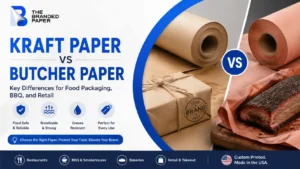
Kraft paper vs butcher paper comparison for food packaging, BBQ smoking, restaurants, and retail wrapping

Kraft Paper vs Butcher Paper: Key Differences for Food Packaging, BBQ, and Retail

Kraft paper and butcher paper can look almost identical. Both may be brown, strong, and sold in large rolls. That similarity often causes restaurants, BBQ businesses, retailers, and home cooks to treat them as interchangeable. They are not always interchangeable. The main difference in kraft paper vs butcher paper is the intended use. Kraft paper is a broad paper category used for bags, shipping, retail wrapping, and many other packaging jobs. Butcher paper is generally made for food handling, meat wrapping, serving, or low-and-slow smoking. Choosing the wrong paper can lead to grease leaks, torn wraps, softened brisket bark, poor freezer protection, or unsafe direct food contact. The right choice depends on the food, temperature, storage time, and presentation you need. Kraft Paper vs Butcher Paper at a Glance Factor Kraft Paper Butcher Paper Basic definition A broad family of strong paper made through the kraft pulping process A food-use paper commonly made from kraft pulp Typical uses Shopping bags, shipping, void fill, gift wrap, retail packaging and tray liners Wrapping meat, deli service, BBQ smoking, food preparation and serving Direct food contact Only when specifically produced and documented for food contact Usually intended for food contact, but specifications still matter Surface May be coated, uncoated, recycled, printed or treated Often uncoated or lightly treated, depending on its purpose Breathability Varies by grade and coating Usually breathable, especially smoker-grade butcher paper Grease handling Regular grades may absorb oil and weaken Food-grade versions generally handle meat juices and grease better Cooking use Ordinary kraft paper should not be used for cooking Certain food-grade, unwaxed products may be used for low-temperature smoking or roasting Freezer protection Ordinary kraft is not a strong moisture barrier Standard butcher paper is not ideal for long-term freezing Branding potential Strong option for bags, wraps and retail presentation Strong option for branded BBQ, deli and restaurant service Is Kraft Paper the Same as Butcher Paper? No. Butcher paper is commonly made from kraft pulp, but not every kraft paper is butcher paper. Think of kraft paper as the larger material family. It includes many grades designed for different jobs: Paper grocery bags Shipping paper Retail wrapping Corrugated packaging Protective void fill Food-contact wrapping Butcher paper Butcher paper is a more specific product within that family. It is normally selected for strength when wet, food handling, absorbency, and breathability. A roll of brown paper from an art, shipping, or hardware store may resemble butcher paper. That does not mean it is suitable for direct contact with brisket, burgers, cheese, sandwiches, or raw meat. Is Kraft Paper Food Safe? Kraft paper is food safe only when it is manufactured for the intended food-contact use. The brown color does not prove that paper is food grade. The same is true for labels such as “natural,” “recycled,” or “unbleached.” Food safety depends on the complete paper specification, including: Fibers used in the paper Processing aids Added sizing agents Surface coatings Adhesives Printing inks Intended food type Contact temperature Length of contact Whether the food is dry, wet, acidic, or greasy The FDA regulates substances used in food-contact materials, including components of paper and paperboard. A packaging supplier should be able to provide documentation showing that the material is suitable for its stated food-contact conditions. Is Brown Kraft Paper Food Safe? Some brown kraft paper is food safe, but ordinary brown kraft paper should not be assumed safe. Before placing food directly on brown kraft paper, confirm that it is: Manufactured for food contact Suitable for the specific food Free from unsuitable coatings or treatments Printed with an appropriate food-packaging ink system Approved by the supplier for the expected temperature Traceable to a reliable material specification A restaurant wrapping a dry baguette has different requirements from a BBQ business wrapping a hot, fatty brisket. “Food grade” should describe the real application, not just the appearance of the paper. Food-Grade Kraft Paper vs Regular Kraft Paper The practical difference is not always visible. Decision Point Food-Grade Kraft Paper Regular Kraft Paper Intended use Made and documented for direct or indirect food contact Made for general packaging, crafts, shipping or industrial use Material controls Selected according to food-contact requirements May include materials not evaluated for direct food contact Odor and cleanliness Controlled to reduce contamination and unwanted odor Standards may focus on strength rather than food protection Ink and coating choice Chosen for the intended food-packaging application Printing system may not be intended for contact with food Grease performance Available with food-safe grease-resistant properties May quickly absorb oils and weaken Supplier documentation Food-contact statements may be available Food-contact documentation may not exist Best use Food wraps, tray liners, bakery packaging and serving applications Shipping, product wrapping, void fill and non-food packaging Virgin Kraft Paper vs Recycled Kraft Paper Virgin kraft paper is made from new wood pulp. It often provides more consistent strength, appearance, odor control, and material traceability. These qualities can be valuable for direct food contact, especially with hot or greasy foods. Recycled kraft paper contains recovered fibers. It can be a practical choice for shopping bags, outer packaging, carryout bags, shipping materials, and other secondary uses. Recycled content is not automatically unsafe. However, buyers should not assume that every recycled paper is suitable for direct food contact. The supplier must confirm the intended use and applicable compliance requirements. Can You Use Kraft Paper Instead of Butcher Paper? You can use kraft paper instead of butcher paper only when the kraft paper meets the same practical requirements. For meat wrapping or smoking, it should be: Food-contact compliant Unwaxed Uncoated or specifically designed to remain breathable Strong when wet Suitable for contact with fatty food Rated by the manufacturer for the expected temperature Free from unknown dyes, inks, or chemical treatments Do not use shipping paper, masking paper, construction paper, grocery-bag paper, or craft paper as a butcher paper substitute simply because it is brown. For cold retail wrapping or secondary packaging, food-grade kraft paper may work well. For a smoker, purpose-made

Read More »
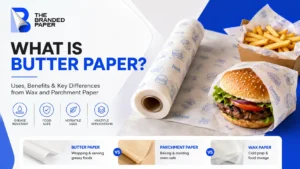
What Is Butter Paper? Comparison of butter paper, parchment paper, and wax paper for food wrapping and baking.

What Is Butter Paper? Uses, Benefits, and Differences from Wax and Parchment Paper

What is butter paper? It is a grease-resistant paper commonly used to wrap butter, baked goods, sandwiches, burgers, and other oily foods. In the United States, the term is less common than greaseproof paper, deli paper, or food wrapping paper. The name is often confusing because some sellers use “butter paper” for parchment paper, while others use it for wax paper or greaseproof wrapping sheets. These materials may look similar, but they do not perform the same way under heat. The safest rule is simple: never judge cooking paper by its appearance or name alone. Check whether the package specifically says oven-safe, microwave-safe, food-safe, or suitable for direct food contact. What Is Butter Paper Made Of? Traditional Butter paper is a dense, grease-resistant paper designed to stop oil and fat from soaking through. Merriam-Webster defines butter paper as greaseproof paper used for wrapping butter or lard. Cambridge Dictionary also describes it as paper that prevents oil from passing through and is used for cooking or wrapping fatty foods. Depending on the manufacturer, the paper may receive mechanical or chemical treatment that closes spaces between its fibers. Some products may also have a coating that improves resistance to grease, moisture, or sticking. This is where product names become unreliable. A sheet sold as butter paper may be: Uncoated greaseproof paper Vegetable parchment Silicone-treated baking parchment Wax-coated food paper Printed food wrapping paper Deli or basket-lining paper These papers are not automatically interchangeable. A grease-resistant wrapping sheet may work perfectly around a burger but fail when placed in a 400°F oven. Butter Paper Is Mainly a Packaging Term In U.S. food service, butter paper is more accurately understood as greaseproof food wrapping paper rather than a universal baking product. It is commonly used by: Bakeries Cafés Delis Burger restaurants Sandwich shops Food trucks Dessert businesses Takeout kitchens The paper creates a clean barrier between the food, the customer’s hands, and the outer packaging. It also helps contain light grease from foods such as pastries, fries, cookies, sandwiches, and wraps. The FDA recognizes grease resistance as an important function of food-contact packaging. It also regulates substances used in materials that come into contact with food, including packaging components designed to prevent grease from leaking through paper or cardboard. Butter Paper vs Parchment Paper vs Wax Paper The biggest difference is not color or thickness. It is how the paper has been treated and what temperature it can safely handle. Paper type Main purpose Typical surface treatment Heat use Best applications Butter paper Wrapping and serving greasy foods Grease-resistant treatment; coating varies Depends on the product Burgers, pastries, sandwiches, basket liners Parchment paper Baking, roasting and pan lining Parchmentized or silicone-coated surface Oven-safe within the stated limit Cookies, cakes, bread, vegetables Wax paper Cold preparation and food storage Paraffin, soybean or another wax coating Generally not oven-safe Candy work, counters, separating foods Aluminum foil Covering, grilling and high-heat cooking Thin aluminum sheet Suitable for many high-heat uses Roasting, covering casseroles, grilling Silicone baking mat Reusable baking surface Food-grade silicone Heat limit varies by brand Cookies, pastries and repeated baking The table gives general uses. The instructions printed by the manufacturer should always take priority. Is Butter Paper the Same as Parchment Paper? Butter paper and parchment paper are not always the same product. Parchment paper is made specifically to resist heat, grease, moisture, and sticking during baking. Many modern parchment products have a light silicone coating that creates a nonstick surface. King Arthur Baking, for example, describes its unbleached parchment as silicone-coated, reusable, and oven-safe up to 450°F. Butter paper is a broader and less controlled term. It may refer to genuine vegetable parchment in some markets, but it may also mean greaseproof wrapping paper that has no verified oven rating. Before replacing parchment with butter paper, check the packaging for: A stated oven temperature Instructions for baking or roasting Microwave suitability Food-contact suitability Warnings about flames, heating elements or broilers Without those details, use butter paper for wrapping and serving rather than baking. What Is Butter Paper Used For? Butter paper is useful anywhere grease control, handling, and food presentation matter. Wrapping Burgers and Sandwiches A grease-resistant sheet helps hold sauces, melted cheese, oils, and crumbs inside the wrap. It gives the customer a cleaner way to eat while protecting the bag or box around the food. Lining Food Baskets Restaurants often line baskets and trays with printed greaseproof paper. The liner reduces direct contact with the serving surface and makes cleanup easier between orders. Packaging Baked Goods Cookies, brownies, croissants, doughnuts, and other baked products can release butter or oil after cooling. Butter paper helps prevent grease marks on boxes and bags. Separating Food Items Small sheets can separate cookies, pastries, cheese slices, burger patties, or sticky products during storage and display. Supporting Branded Presentation Custom-printed butter paper can place a logo, pattern, slogan, or social media handle directly around the food. Unlike a sticker on the outer bag, the branding remains visible while the customer is eating. For cafés and takeout businesses, that repeated visibility can make ordinary packaging feel more intentional without adding another container. Benefits of Butter Paper for Food Businesses Cleaner Food Handling Greaseproof paper creates a practical layer between hands and food. It helps customers manage messy products such as burgers, loaded sandwiches, pastries, and fried snacks. Better Grease Control The paper slows oil from reaching trays, cartons, bags, counters, and clothing. Performance still depends on the paper’s grease resistance, food temperature, oil content, and holding time. A light pastry and a hot burger with sauce place very different demands on packaging. Faster Service Precut sheets are easy to grab, fold, wrap, and replace. Staff do not need to measure paper from a roll during busy service periods. More Consistent Presentation Using one paper size and print pattern across orders creates a more controlled appearance. That matters when customers photograph food for reviews or social media. Flexible Branding Printed food paper can be used across several

Read More »
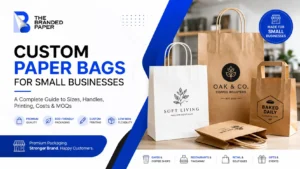
Custom paper bags for small businesses with kraft and white branded packaging options

Custom Paper Bags for Small Businesses: Sizes, Handles, Printing and MOQ Guide

Custom paper bags can make a small business look established, organized, and easy to remember. Yet ordering them is not as simple as placing a logo on a standard shopping bag. The wrong bag may tear under weight, crush food containers, waste storage space, or make the logo difficult to read. Small businesses also need to manage minimum order quantities, cash flow, design costs, and changing packaging needs. The best choice is usually a bag that fits the product closely, carries the expected weight, and uses a printing method suited to the order quantity. A simple one-color kraft bag may be more practical than an expensive full-color bag, especially for a new bakery, café, boutique, or food truck. What Should a Small Business Choose? Most small businesses should begin with a kraft or white paper bag in one or two practical sizes. Twisted paper handles work well for retail and takeaway orders, while flat handles offer a lower-cost option for everyday food service. Use this starting point: Business need Practical starting option Bakery or coffee shop Small or medium kraft bag with flat handles Restaurant takeaway Wide-gusset kraft bag with twisted or flat handles Clothing boutique Medium white or kraft bag with twisted handles Gift shop Heavier paper with rope or twisted handles Events and promotions Lightweight bag with one-color printing Premium products White paper, reinforced base, specialty finish The Branded Paper supplies customizable paper bags for retail shopping, bakeries, food carryout, gifts, events, and promotional use. Available options include multiple sizes and twisted or flat paper handles. Why Custom Paper Bags Work for Small Businesses A paper bag is more than a way to carry a purchase. It travels with the customer, appears in photos, sits on desks, and may be reused later. That makes it useful branded packaging for a small business. A well-planned bag can: Make pickup and retail orders look more professional Keep several products together during transport Help customers recognize the business Create a consistent look across store, delivery, and event orders Provide space for a logo, website, QR code, or social handle Support paper-based packaging goals where the construction allows recycling The benefit does not come from printing the largest possible logo. It comes from making the packaging useful first and branded second. A bakery customer carrying four pastry boxes needs a stable, wide-bottom bag. A clothing customer may care more about the bag’s appearance and handle comfort. A food truck needs bags that open quickly and do not slow the service line. Each business needs a different balance. How to Choose the Right Paper Bag Size Paper bag sizes are normally listed as: Width × Gusset × Height The width measures the front panel. The gusset is the folded side or bottom depth. The height measures from the base to the opening. The gusset is often overlooked. It determines whether a box, container, or group of products can sit flat inside the bag. Practical Size Planning Bag category General size range Common uses Extra small 4–6 inches wide Jewelry, candy, samples, small gifts Small 6–8 inches wide Coffee, pastries, cosmetics, accessories Medium 8–10 inches wide Apparel, boxed food, books, gifts Large 10–14 inches wide Takeaway orders, shoe boxes, multiple products Wide-gusset 6–10 inches deep Meal containers, bakery boxes, catering orders Tall narrow 4–6 inches wide and 12–16 inches tall Bottles, flowers, long products These ranges are starting points rather than fixed standards. Always measure the finished product and any box, cup holder, tissue, or food container placed around it. Test the Full Order, Not One Product A common sizing mistake is testing a bag with only one item. A restaurant may sell one lunch container, but a normal customer order could include: Two meal containers A side dish Sauce cups Napkins Cutlery A drink or dessert The bag must fit the real order without forcing employees to stack items at unsafe angles. Before approving production, place a typical order inside a plain sample bag. Carry it for several minutes. Check the handles, bottom panel, folds, and space around the products. Avoid Oversized Bags A larger bag is not always better. Oversized bags: Use more paper Cost more to produce and ship Take up more storage space Allow food containers to slide Make small purchases look incomplete May require extra tissue or filler The best size leaves enough room for easy packing without creating excessive empty space. Paper Bag Handle Types Handles affect comfort, cost, production time, appearance, and recycling instructions. Handle type Main benefit Best use Main limitation Twisted paper Comfortable and presentable Retail, bakeries, takeaway orders Usually costs more than flat handles Flat paper Affordable and easy to stack Cafés, restaurants, everyday retail Less premium in appearance Rope handle Strong premium look Gifts, cosmetics, luxury retail Adds cost and another material Ribbon handle Decorative presentation Events and gift packaging Not ideal for heavy daily use Die-cut handle Clean shape without an attached handle Apparel, events, light products Can be uncomfortable with heavy items Handleless bag Low cost and fast packing Grocery items, bakery goods, quick service Customer must hold the bag body Twisted paper handles are a balanced choice for many small businesses. Flat handles are often better when price, stacking, and quick service matter most. For heavy food orders, handle attachment matters as much as handle style. Look for reinforced handle patches and a secure bottom construction. Kraft Paper vs White Paper Bags Brown kraft and white paper bags are the two most common starting materials. Brown Kraft Paper Bags Brown kraft creates a natural, casual, and handmade appearance. It works well for: Bakeries Coffee shops Organic food brands Farmers’ markets Barbecue restaurants Natural skincare brands Craft and gift businesses Dark ink normally prints clearly on brown kraft. Light colors, fine gradients, and photographic images may not appear as bright because the brown surface affects the final color. White Paper Bags White paper provides a cleaner background for colorful artwork. It is often chosen by: Clothing stores Dessert shops Cosmetics

Read More »
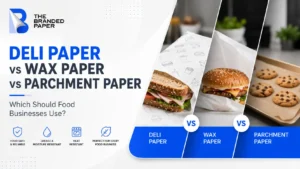
Deli paper vs wax paper vs parchment paper comparison banner with food wrapping examples and bakery scene.

Deli Paper vs Wax Paper vs Parchment Paper: Which Should Food Businesses Use?

Choosing the right food wrapping paper can affect product quality, customer experience, and daily operations. Many food businesses use deli paper, wax paper, and parchment paper, but these materials are not designed for the same purpose. A burger shop may need paper that handles grease without tearing. A bakery may need heat-resistant paper for baking. A restaurant offering takeaway meals may need packaging that keeps food fresh while creating a professional presentation. Understanding the difference between Deli Paper vs Wax Paper vs Parchment Paper helps food businesses choose the right material for sandwiches, burgers, baked goods, and other food products. Deli Paper vs Wax Paper vs Parchment Paper: Quick Comparison Feature Deli Paper Wax Paper Parchment Paper Main Use Wrapping sandwiches, burgers, deli foods Wrapping cold or room-temperature foods Baking and heat-resistant cooking Heat Resistance Limited Low High Grease Resistance Good Excellent Excellent Best For Restaurants, cafes, food trucks Food storage and wrapping Bakeries and kitchens Oven Safe No No Yes Custom Printing Commonly available Less common Available but usually for specific applications Food Presentation Excellent Average Good Each paper type solves a different problem. The best choice depends on how your business prepares, stores, and serves food. What Is Deli Paper Used For? Deli paper is a thin food-safe sheet commonly used by restaurants, sandwich shops, cafes, and food trucks. It is designed for quick wrapping, serving, and presentation. Many businesses use deli sheets for sandwiches because they are lightweight, easy to handle, and help create a clean serving experience. Common uses include: Sandwich wrapping Burger wrapping Food basket liners Bakery item wrapping Takeout packaging Counter service presentation Deli paper is especially useful when speed matters. Employees can quickly wrap food items during busy hours without dealing with bulky packaging. For example, a burger restaurant handling hundreds of orders daily needs packaging that is easy to fold, stack, and store. Deli paper helps create a smoother workflow while keeping food presentation consistent. Benefits of Deli Paper for Food Businesses Deli paper offers several advantages: Easy handling: Employees can wrap food quickly during busy periods. Better presentation: Printed or branded sheets can improve the customer experience. Lightweight storage: Large quantities take less space compared to boxes or containers. Versatile use: Works well for sandwiches, burgers, fries, and bakery products. For businesses focused on branding, custom deli paper also creates an opportunity to turn simple wrapping into part of the customer experience. Wax Paper vs Parchment Paper: What Is the Difference? The difference between Wax paper and parchment paper mainly comes down to their coating and heat performance. Wax paper has a thin layer of wax coating that creates a moisture-resistant surface. It works well for wrapping foods but should not be exposed to high heat. Parchment paper uses a silicone coating that provides a non-stick surface and allows it to handle oven temperatures. Wax Paper Uses Common wax-coated paper uses include: Wrapping sandwiches Separating baked goods before storage Covering food in refrigerators Preventing food from sticking together Wax paper works well for cold food preparation, but it is not suitable for baking. A common mistake is using wax paper as a replacement for parchment paper in the oven. The wax coating can melt when exposed to high temperatures. Can You Bake With Wax Paper? No, wax paper is not recommended for baking. When heated, the wax coating can melt and transfer onto food. For baking cookies, pastries, or other oven items, parchment paper is the safer choice. Parchment Paper Uses in Cooking Parchment paper is mainly used in kitchens where heat resistance and non-stick performance are important. Common parchment paper uses in cooking include: Baking cookies Roasting vegetables Preparing pastries Lining baking trays Preventing food from sticking Many bakeries rely on parchment paper because it reduces cleanup time and helps maintain consistent baking results. However, parchment paper is not always the best choice for food wrapping. It can be more expensive than deli paper and may not provide the same branding opportunities for takeaway businesses. Deli Paper vs Parchment Paper: Which One Is Better? The choice between deli paper and parchment paper depends on how the paper will be used. Choose Deli Paper When: Deli paper is better for: Sandwich shops Burger restaurants Cafes Food trucks Takeout businesses It works well when the goal is quick serving, attractive presentation, and easy handling. Choose Parchment Paper When: Parchment paper is better for: Bakeries Commercial kitchens Food preparation areas Oven-based cooking It provides better heat resistance and prevents food from sticking. A sandwich shop usually does not need parchment paper for every order because the food is already cooked. A bakery, however, may depend on parchment paper for daily production. Is Deli Paper the Same as Wax Paper? No, deli paper and wax paper are different materials. Deli paper is usually designed for food presentation and wrapping, while wax paper has a moisture-resistant wax coating. Key differences: Deli Paper Wax Paper Used mainly for serving food Used mainly for storage and wrapping Common in restaurants Common in home kitchens Available with custom printing Usually plain Designed for presentation Designed for moisture protection For restaurants that want branded food packaging, deli paper is often the better option because it combines function with visual appeal. Greaseproof Paper vs Wax Paper vs Parchment Paper Many food businesses also compare greaseproof paper with other wrapping materials. Greaseproof paper is designed to resist oil and grease, making it useful for foods like: Burgers Fried foods Pastries Sandwiches The main difference is performance: Paper Type Best Feature Common Use Greaseproof Paper Handles oily foods Burgers and fried items Wax Paper Moisture protection Cold food storage Parchment Paper Heat resistance Baking and cooking Deli Paper Fast wrapping and branding Restaurants and cafes Choosing the wrong paper can create problems such as leaks, messy packaging, or poor customer presentation. Best Paper for Sandwich Wrapping and Burgers For sandwiches and burgers, businesses usually need paper that balances: Grease resistance Easy folding Food safety Good appearance Brand visibility Deli paper and

Read More »
Butcher paper sheets vs rolls comparison banner for restaurants, BBQ, and meat shop food packaging

Butcher Paper Sheets vs Rolls: Which Is Better for Restaurants, BBQ and Meat Shops?

Choosing between butcher paper sheets and rolls may seem like a small packaging decision. In a busy food business, however, the wrong format can slow down service, create unnecessary waste, increase packaging costs, and make finished orders look inconsistent. The best choice depends on what you wrap, how many orders you handle, how much counter space you have, and whether presentation needs to remain consistent across every location. For most high-volume restaurants, pre-cut butcher paper sheets provide faster and more predictable service. Rolls offer greater flexibility when products vary in size, making them especially useful for BBQ kitchens and meat shops. Butcher Paper Sheets vs Rolls: Quick Answer Business need Better choice Main reason Fast sandwich and burger service Sheets Ready to grab and wrap Consistent branded presentation Sheets Every piece has the same dimensions Large briskets and meat cuts Rolls Length can be adjusted Products with different sizes Rolls Less risk of using an undersized sheet Tight cost and portion control Sheets Easier to track paper use Small preparation counter Sheets No cutter or roll holder required Custom logo visibility Sheets Print placement is easier to control Catering and mixed packaging Both Each format covers different tasks Neither option is automatically better. Sheets improve speed and consistency, while rolls improve flexibility. What Is Butcher Paper Used For? Butcher paper is a durable wrapping paper commonly used for meat, sandwiches, barbecue, seafood, deli items, tray liners, and food presentation. Depending on the exact material, it may be breathable, moisture-resistant, grease-resistant, treated, or uncoated. Common food-service uses include: Wrapping burgers, sandwiches, and subs Wrapping fresh cuts of meat Covering brisket during smoking Lining baskets, trays, and serving boards Separating meat portions Covering preparation tables Packaging deli and grab-and-go products Creating branded food presentation Not every paper sold under the butcher paper name performs the same way. Pink, white, treated, untreated, coated, and uncoated papers can behave differently around heat, grease, moisture, and raw food. Food businesses should match the paper to its intended use rather than choosing by color or price alone. Butcher Paper Sheets: Best for Speed and Consistency Butcher paper sheets arrive in fixed, pre-cut sizes. Employees can take one sheet, place the food in the center, and wrap it without measuring or cutting. That small time saving becomes important during lunch rushes, weekend BBQ service, catered events, and high-volume takeout periods. Benefits of Butcher Paper Sheets Faster service Pre-cut sheets remove the cutting step. Employees do not have to pull paper from a dispenser, estimate the required length, and operate a cutter for every order. More consistent packaging Every employee uses the same amount of paper for the same menu item. Orders look cleaner and more uniform, even when different team members prepare them. Better paper-use control Fixed sizes make it easier to estimate usage. If a location sells 500 sandwiches, management can predict approximately how many sheets will be needed. Cleaner custom printing Custom printed butcher paper sheets can be designed around fixed dimensions. The logo can be positioned so it remains visible after folding instead of disappearing under the food. Simpler workstation setup Sheets can be stored in a dispenser, drawer, or shelf near the wrapping area. No roll holder or cutting bar is required. Limitations of Butcher Paper Sheets Sheets are less flexible when products vary greatly in size. A sheet that works well for a burger may not cover a rack of ribs or a large brisket. Using an oversized sheet for a small item also adds avoidable material cost. Using an undersized sheet can cause poor folds, exposed food, leaking juices, or weak packaging. Sheets work best when a business has: Standard menu portions Repeatable packaging processes High order volume Limited preparation time A strong need for consistent presentation Butcher Paper Rolls: Best for Flexible Sizing Butcher paper rolls allow employees to cut the required length for each product. They are useful when food dimensions change from order to order. A BBQ kitchen may wrap briskets, pork shoulders, ribs, and smaller smoked portions during the same shift. A butcher shop may package anything from small steaks to large roasts. A roll allows the wrapper to adjust without keeping many sheet sizes in stock. Benefits of Butcher Paper Rolls Flexible length The employee can cut enough paper for the exact product instead of forcing the food into a standard sheet. Suitable for larger items Rolls are practical for whole briskets, racks of ribs, large fish, meat trays, preparation tables, and irregularly shaped products. Fewer sheet sizes to manage A business can use one or two roll widths for many tasks. That may simplify purchasing when product dimensions change frequently. Useful for preparation work Rolls can cover tables, protect work surfaces, create disposable preparation areas, or support large catering displays. Limitations of Butcher Paper Rolls Rolls take longer to handle. Each piece must be pulled, measured, and cut. During a rush, employees may cut too much paper or create uneven pieces. A roll also requires: A stable dispenser or cutter Enough counter or wall space Employee training Clear size standards Regular monitoring to reduce waste Rolls are most useful when flexibility matters more than wrapping speed. Butcher Paper Roll vs Sheets for Packaging The practical difference is not only the shape in which the paper is supplied. The format changes the packaging workflow. With sheets, management decides the paper size before service starts. With rolls, the employee decides the paper length while wrapping the order. That difference affects labor, waste, training, and consistency. Factor Butcher paper sheets Butcher paper rolls Service speed Faster Slower Size flexibility Limited High Portion control Easier Depends on employee Paper waste Predictable Can increase without standards Branding consistency Strong Print placement may vary Storage Flat storage required Roll storage required Equipment Usually none Dispenser or cutter Best environment Standardized menu Variable product sizes A standardized restaurant operation usually benefits from sheets. A production area handling different meat cuts often benefits from rolls. Butcher Paper Sheets vs Rolls for Restaurants

Read More »
Custom wax paper cost for restaurants with custom printing and bulk pricing

How Much Does Custom Wax Paper Cost for Restaurants? Sizes, MOQ, Printing and Ordering Guide

Custom wax paper can make a burger, sandwich, or pastry look more professional. It can also keep grease under control and place your logo directly in the customer’s hands. The difficult part is understanding the price. Many suppliers do not display a fixed custom wax paper price because every order is different. Sheet size, quantity, paper type, print colors, coating, artwork, shipping, and production method can all change the final cost. A restaurant ordering 500 full-color sheets for a short promotion may pay far more per sheet than a multi-location brand ordering 50,000 one-color sheets. The lowest quote is not always the lowest operating cost either. Paper that tears, leaks, wastes space, or slows down the wrapping station can cost more during daily service. How Much Does Custom Wax Paper Cost? Custom wax paper often costs about $0.08 to $0.30 or more per sheet, depending on the specifications and order volume. Publicly listed examples show why prices can vary: A 500-unit custom wax paper listing may cost around $0.30 per unit A 1,000-sheet custom food-wrap listing may cost around $0.15 per sheet A 5,000-sheet custom grease-resistant paper listing may cost close to $0.08 per sheet These examples are not equal product comparisons. Paper size, material, coating, print quality, freight, and country of production may differ. They are useful only as early budgeting references. A final custom printed wax paper cost should come from a quote based on the restaurant’s exact requirements. Quick Cost Estimate Order quantity General planning range per sheet Best suited for 500–999 sheets $0.20–$0.40+ Pop-ups, new cafés, events and test orders 1,000–4,999 sheets $0.12–$0.30 Independent restaurants and bakeries 5,000–24,999 sheets $0.07–$0.18 Busy restaurants and growing food brands 25,000+ sheets Custom wholesale quote Chains, franchises and distributors These ranges are broad planning estimates, not guaranteed selling prices. A small sheet with one-color printing will usually cost less than a large, heavy sheet with full-color artwork. The most useful number is not always the lowest custom wax paper price per sheet. Restaurants should compare the complete landed cost and the number of usable wraps received. Use this formula: Landed cost per sheet = total product, setup, and delivery cost ÷ usable sheet quantity A quote that excludes freight, plate charges, artwork fees, or delivery can appear cheaper than it really is. What Changes the Custom Wax Paper Price? The main price factors are quantity, size, paper construction, print coverage, color count, production method, and delivery requirements. The Branded Paper’s custom wax paper quote form asks buyers to choose the standard size, paper type, quantity, and one-, two-, or four-color printing. Those are some of the first details a supplier needs before giving an accurate price. 1. Order Quantity Quantity usually has the largest effect on cost per sheet. Custom printing requires preparation before production begins. The supplier may need to review the file, prepare plates or digital settings, adjust ink, cut the paper, create a proof, and set up packing. Those setup costs are spread across the whole order. For example: A $100 setup cost spread across 500 sheets adds $0.20 per sheet The same cost spread across 5,000 sheets adds $0.02 per sheet Spread across 50,000 sheets, it adds only a small fraction of a cent This is why bulk custom wax paper discounts can lower the unit price. The restaurant buys more material, but the fixed production work is shared across more sheets. Do not order a year of stock only to reach a lower tier. Printed packaging uses storage space, and branding can change. Menu redesigns, logo updates, new phone numbers, and seasonal campaigns can leave old paper unusable. A practical order should balance: Monthly usage Available storage Cash flow Reorder lead time Expected brand changes Supplier price breaks 2. Sheet Dimensions Larger sheets require more paper and take up more space during packing and shipping. A 15-by-15-inch sheet will normally cost more than a 6-by-6-inch sheet with the same material and print design. Oversized paper can also create hidden waste. A restaurant wrapping 5-inch burgers with a 15-inch sheet may spend more on every order without improving food protection. Paper that is too small creates another problem: staff may use two sheets instead of one. The correct size should fully cover the item with enough overlap for a secure fold, but not so much that large sections are discarded. Common Custom Wax Paper Sizes Custom wax paper sizes differ among suppliers, but commonly offered dimensions include 6 by 6 inches, 10 by 10 inches, 12 by 12 inches, 12 by 16.5 inches, and 15 by 15 inches. Custom dimensions may also be available. Food or use Practical starting size Important consideration Cookies and small pastries 6″ × 6″ Allow enough space to fold without crushing the item Small burgers and breakfast sandwiches 10″ × 10″ Test with the tallest finished burger, not the bun alone Standard burgers and sandwiches 12″ × 12″ Check the amount of overlap after wrapping Subs, burritos and large sandwiches 12″ × 16″ or larger Longer sheets support end folds Baskets and serving trays Based on inside dimensions Decide whether the paper should cover the base or extend over the sides Bakery boxes Based on box dimensions Avoid folds that hide the printed design What Size Wax Paper Is Best for Sandwiches? A 12-by-12-inch sheet is a useful starting point for many standard sandwiches. Smaller items may fit a 10-by-10-inch sheet, while subs, wraps, and heavily filled sandwiches may need a rectangular sheet. Measure the finished food, including toppings and packaging height. A flat bread measurement is not enough. A sandwich that is five inches wide may become seven or eight inches across once fillings are added and the paper is folded around it. A simple test can prevent a costly size mistake: Prepare the largest normal sandwich on the menu. Wrap it with plain paper cut to the proposed size. Check the overlap and end folds. Repeat the test during a busy service period. Ask staff whether the sheet

Read More »
Wax Paper vs Parchment Paper

Wax Paper vs Parchment Paper: Which One Should You Actually Use?

Wax Paper vs Parchment Paper can seem like a small decision, but the wrong choice can ruin a tray of cookies, create oven smoke, and turn a simple order into a costly remake. For bakeries, food brands, and kitchens that move fast, that mistake means more than a messy tray. It can mean wasted ingredients, extra labor, unhappy customers, and avoidable returns. In food service, the paper under the product matters as much as the product itself because it affects presentation, safety, and how much work gets repeated. That is why this choice matters in real buying situations. Some teams need wax paper for wrapping, cold prep, or storage. Others need parchment paper for baking, lining trays, and keeping the release clean and simple. Many people search can you bake with wax paper, ” Can wax paper go in the oven, or ” Is wax paper oven safe only after they have already had a problem in the kitchen. The right answer depends on heat, moisture, and the job you need the paper to do. For brands that care about clean handling, strong presentation, and trusted performance, the better paper can save time and protect margin. Why the Right Food Paper Matters More Than Most People Think The difference between wax paper vs parchment paper shows up in everyday work. A baker lining a tray needs a surface that stays stable in heat. A deli packing sandwiches needs a clean wrap that handles moisture well. A fulfillment team needs food wrapping paper that USA buyers can trust for neat presentation and less mess during packing. When the wrong paper is used, the result is not just inconvenience. It can lead to sticking, tearing, grease transfer, or a poor customer experience that weakens trust. That is why people compare baking paper vs wax paper before they buy. They want the best paper for baking, the safest wrap for food handling, and the most reliable option for their process. The best choice is not always the same for every task. It depends on whether the paper is being used as oven-safe paper, a wrap, a liner, or a surface for hot food. Where Wax Paper Works Best in Real Kitchens The safest way to think about what wax paper is used for is to picture cold, low-heat, and wrapping tasks. Wax paper uses usually include sandwich wrapping, separating layers of baked goods, lining counters for prep, and keeping sticky foods from clumping together. In many kitchens, it is a practical, food-safe paper that USA buyers use for fast, clean handling when heat is not part of the process. This is also why people search for wax paper for food wrapping so often. It helps keep food neat, contains moisture better than plain paper, and works well when the goal is simple handling rather than heat resistance. For teams that pack snacks, baked goods, or deli items, wax paper can support cleaner workflows and a more polished look. But it is not the right answer for everything. If heat is involved, wax paper is not the paper to trust. Parchment Paper Delivers Cleaner Baking Results If the goal is heat and clean release, what is parchment paper used for becomes the more important question. Parchment paper uses are centered on baking trays, cookie sheets, roasting setups, and recipes where sticking can slow everything down. It is the paper that many people want when they search for non-stick paper for baking or non-stick baking paper. This is where parchment paper for baking stands out. It gives a cleaner release, helps keep pans easier to wash, and makes batch work smoother. It is also one of the most dependable choices for cookie baking paper, which is why it is common in bakeries and home kitchens alike. When someone asks for the best paper for baking, parchment paper is often the first serious answer because it handles heat better and supports a more reliable finish. For tray-based work, it is also a strong match for paper liners for baking and paper for oven baking. If the job is hot, repeated, and messy, parchment is usually the safer and more professional choice. Using Wax Paper in the Oven Can Cause Bigger Problems The short answer to ” Can you bake with wax paper is no, not for oven use. That is where a lot of kitchen mistakes begin. Wax paper has a coating that is useful for wrapping and separating, but it is not made for sustained oven heat. So when people ask can wax paper go in the oven, the answer is generally no. And when they ask if wax paper is oven safe, the practical answer is also no for normal baking tasks. That is why wax paper vs parchment paper matters so much. The two may look similar, but they behave very differently under heat. Wax paper belongs in cold prep and wrapping jobs. Parchment paper belongs in baking and oven work. Mixing them up can lead to smoke, damage, and wasted product. If a tray is going into the oven, choose a true heat-resistant paper option made for that use. Do not rely on wax paper for baking, roasting, or any job where direct oven heat is involved. A Simple Way to Pick the Right Paper Every Time When people compare parchment paper vs wax paper, the decision usually comes down to one question: Is heat part of the process? Use this simple rule: Choose wax paper for wrapping, stacking, and cold prep. Choose parchment paper for baking, lining trays, and hot food release. Choose a verified oven-safe paper when heat is involved. Choose a paper that matches the final use, not just the look. This is also where baking sheet paper and kitchen paper for baking come into the conversation. Many buyers use those terms loosely when they really need parchment. The same happens with greaseproof paper, which is often discussed alongside parchment in food packaging and baking circles. For many

Read More »